

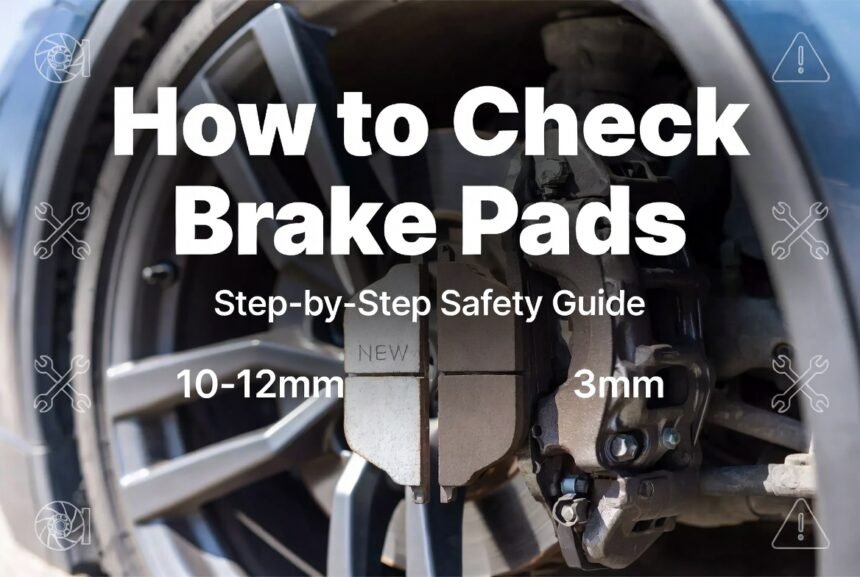
How to check brake pads is one of the easiest and most important DIY skills any driver can learn. It takes just minutes, costs nothing, and can prevent dangerous situations on the road. Whether you drive in stop-and-go city traffic or mostly on highways, knowing exactly how your brake pads are holding up keeps your family safe and your repair bills low.
- Why Regular Brake Pad Checks Matter
- Warning Signs Your Brake Pads Are Worn
- Tools You’ll Need for a Brake Pad Inspection
- Essential Safety Precautions Before Checking Brakes
- How to Check Brake Pads Without Removing the Wheel
- How to Check Brake Pads by Removing the Wheel
- Inner vs Outer Brake Pad Wear – What It Means and How to Spot It
- How to Measure Brake Pad Thickness
- Understanding Brake Wear Indicators & Sensors in Modern Vehicles
- When to Replace Brake Pads
- Maintenance Schedule & Pro Tips to Extend Brake Life
- Common Mistakes to Avoid When Checking Brake Pads
- Brake Pad Types and How They Affect Inspection
- When to Call a Professional Mechanic
- FAQ: Your Most Common Brake Pad Questions Answered
- Conclusion – Next Steps for Brake Safety
In this complete guide, you’ll get every detail the top-ranking pages cover — plus unique insights they missed, like sudden cleaner wheels as a warning sign, checking brake fluid color, and the exact way pros turn the wheel for a better view. We’ll use simple steps, real measurements, safety-first advice, and clear visuals so you can inspect with confidence. Let’s make sure your brakes are ready for whatever the road throws at you.

Why Do Brake Pads Wear Faster Than Rotors? – Runex Auto
Why Regular Brake Pad Checks Matter
Brake maintenance isn’t optional — it’s essential for brake safety. Driving habits and road conditions play a huge role in how fast brake pads wear. Urban drivers with lots of stopping and starting often need checks sooner than highway drivers.
Many experts recommend inspecting brake pads every time you rotate your tires — about every six months. Your owner’s manual may have even more specific intervals, so check it first. Catching brake wear early protects your rotors, improves stopping power, and can even help you save on insurance claims by preventing avoidable accidents.
For official safety recommendations, see the NHTSA’s brake guidelines.
Warning Signs Your Brake Pads Are Worn
Your car usually gives clear signs of worn brake pads before real trouble starts. Watch for these warning signs of worn-out brake pads:
- High-pitched brake squealing when you lightly press the pedal (the wear indicator at work).
- Brake grinding or metal scraping noise — even when the vehicle is moving, not just braking.
- Brake pedal vibration or a shaking steering wheel during stops.
- Longer stopping distances or a spongy, deeper brake pedal that travels farther than usual.
- The brake warning light on your dashboard.
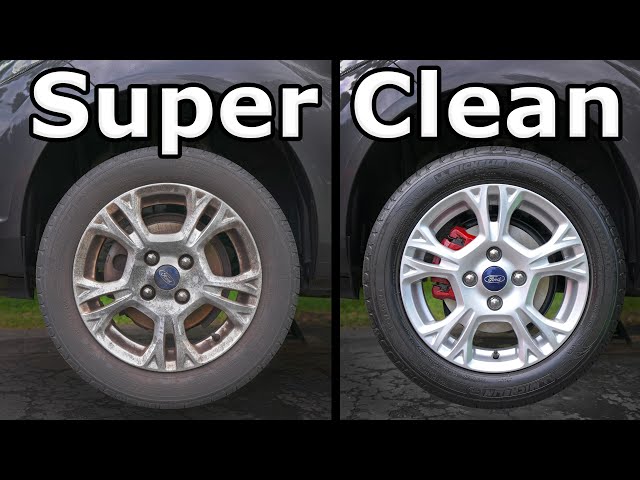
- Sudden change in brake dust — if your wheels suddenly look much cleaner than normal, the pads may be too thin.
These signs appear because the friction material is wearing away. A high-pitched squeal often means the wear indicator tab is touching the rotor. Grinding means you’re at metal-on-metal. Don’t wait — inspect as soon as you notice any of them.
How to Super Clean your Wheels – YouTube
Tools You’ll Need for a Brake Pad Inspection
You don’t need a shop full of tools. Most drivers can do a thorough check with:
- A bright flashlight
- A small mirror or phone camera
- A ruler or brake pad thickness gauge
- Jack and lug wrench (only if removing the wheel)
- Wheel chocks for safety
A popsicle stick or plastic straw works great as a quick depth checker. Keep a simple kit in your trunk and you’ll always be ready.
Essential Safety Precautions Before Checking Brakes
Brake safety is non-negotiable. Park on level ground, turn off the engine, and let the brakes cool for at least one hour — hot brakes can cause serious burns. Place wheel chocks behind the tires you’re not lifting, set the parking brake, and never trust the jack alone. Always use jack stands.
If anything feels off or you’re unsure, stop and call a professional. Your brakes are a life-critical system.
How to Check Brake Pads Without Removing the Wheel
This is the fastest method and answers the popular question: “Can you check brake pads without removing the wheel?” Yes — and it works great on most cars.
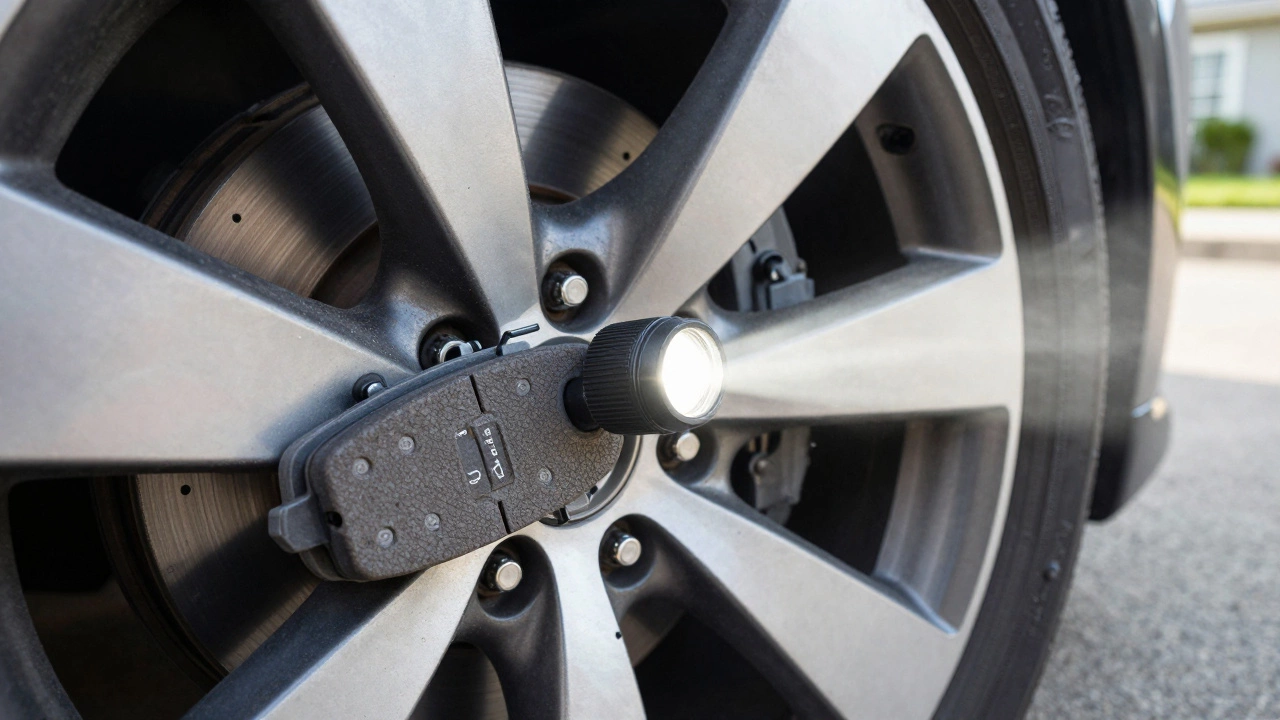
Park safely and turn the steering wheel all the way outward. This gives you the best view through the spokes. Shine your flashlight into the gap and look for the dull, blocky brake pad pressing against the shiny rotor. You should see at least 3–5 mm of material. If the pad looks paper-thin or you can’t see any friction material at all, it’s a red flag.
Use your phone camera or a mirror for an even better angle. Many drivers also slide a straw or popsicle stick gently against the pad edge for a quick thickness estimate. This how to check brake pads without removing the wheels trick is perfect for quick weekly checks.
Can You Check Brake Pads Without Removing the Tire? Here’s How
How to Check Brake Pads by Removing the Wheel
For the most accurate inspection, remove the wheel. Place the jack under the vehicle frame next to the tire, elevate the car about 6 inches, remove the lug nuts, and take the wheel off. Now you can clearly see both the outer and inner pads plus the rotor surface.
Look for glazing (shiny, hardened spots on the pads), deep grooves in the rotor, or any uneven wear. This full how to inspect brake pads method gives you the complete picture.
Inner vs Outer Brake Pad Wear – What It Means and How to Spot It
Inner vs outer brake pad wear is a detail many drivers miss. The inner pad often wears faster because of how the caliper piston works. A stuck caliper or uneven pressure can cause one side to thin out while the other looks fine.
Always compare both pads. Significant difference usually points to a caliper problem that needs professional attention. Spotting uneven wear early prevents bigger damage.

Top 5 Causes of Uneven Brake Pad Wear & How to Fix It
How to Measure Brake Pad Thickness
This is the most important step. New brake pads are typically 10–12 mm thick (about ⅜ to ½ inch). Replace them when they reach 3 mm or less — roughly ¼ inch or thinner. Some experts recommend changing them at 6 mm for extra safety.
Here’s an easy reference table:
| Pad Condition | Thickness (mm) | Thickness (inches) | Action |
|---|---|---|---|
| Brand New | 10–12 mm | ⅜” – ½” | Good to go |
| Still Safe | 6–9 mm | ~¼”+ | Monitor closely |
| Replace Now | 3 mm or less | ¼” or less | Replace immediately |
Look for the wear indicator slot on brake pads — when the slot is almost gone, it’s time. Measure in several spots because wear is rarely even.
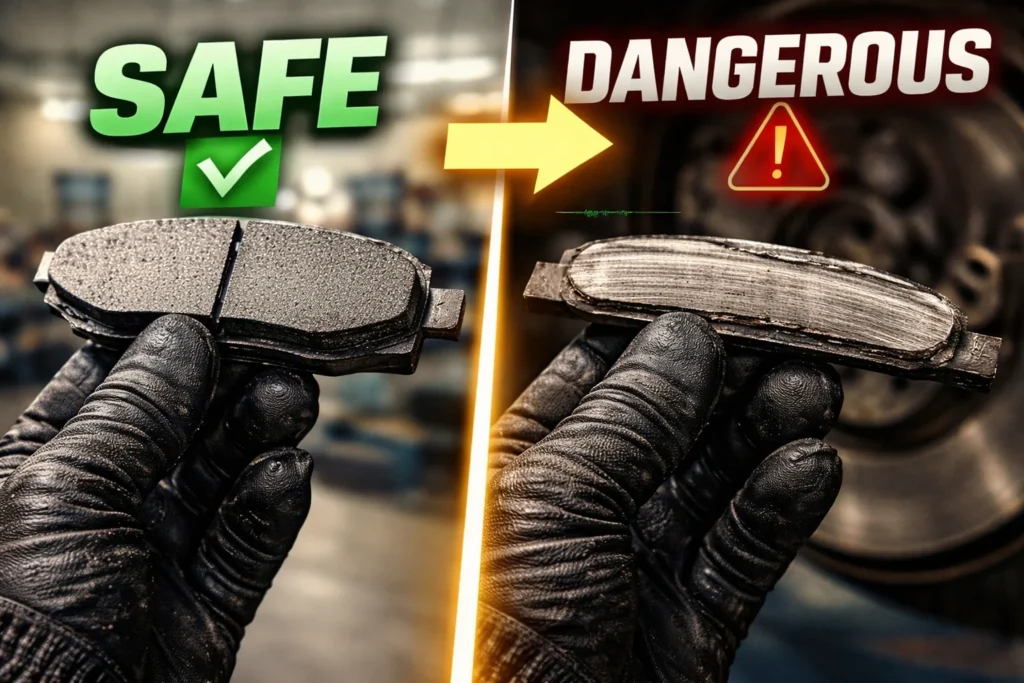
Brake Pad Measurement: A Step-by-Step Guide to Staying Safe
Understanding Brake Wear Indicators & Sensors in Modern Vehicles
Most pads have a mechanical tab that creates the loud squeal. Newer cars use electronic brake wear sensor systems that light up the brake warning light. Some vehicles even tie the warning into the dashboard computer.
Electric and hybrid cars use regenerative braking, so pads last longer — but you still need to check them regularly.
When to Replace Brake Pads
Replace brake pads at 3 mm or less, or anytime you see heavy signs brake pads need replacement. Replace all four pads at once for balanced braking. Early replacement also protects your rotors from scoring and saves money long-term.
Maintenance Schedule & Pro Tips to Extend Brake Life
Check your brake pads every six months or at every tire rotation. Urban drivers should plan for 30,000–35,000 miles; highway drivers can stretch closer to 80,000 miles.
Simple habits help: avoid riding the brakes, keep brake fluid fresh (dark fluid means it’s time to change), and wash off brake dust regularly. For more maintenance tips, see AAA’s brake advice.
Common Mistakes to Avoid When Checking Brake Pads
Don’t check only the outer pad. Don’t skip the rotor or work on hot brakes. Always inspect all four wheels and compare inner versus outer pads. These small mistakes can turn a simple check into an expensive repair.
Brake Pad Types and How They Affect Inspection
Semi-metallic pads are tough but noisy and dusty. Ceramic pads are quieter and cleaner but cost more. Knowing your type helps you understand what normal wear looks like.
When to Call a Professional Mechanic
If you see deep rotor grooves, glazing, or any brake failure symptoms, take the car to a certified technician. They use genuine parts and can perform a full system check you can’t do at home.
FAQ: Your Most Common Brake Pad Questions Answered
How to check brake pads without removing the wheel?
Turn the wheel outward, shine a flashlight through the spokes, and look for at least 3–5 mm of pad material.
How thick should brake pads be?
New pads are 10–12 mm. Replace at 3 mm or ¼ inch or less.
Can you check brake pads without jacking up the car?
Yes — the no-wheel-removal method works great on most vehicles.
What does brake squealing mean?
It’s usually the wear indicator telling you the pads are thin.
How often should you check brake pads?
Every six months or at every tire rotation.
Signs brake pads are bad before they squeal?
Sudden cleaner wheels, vibrations, or longer stopping distances.
Brake pad replacement threshold mm vs inch?
Most mechanics replace at 3 mm (¼ inch) or less.
Conclusion – Next Steps for Brake Safety
You now know exactly how to check brake pads using both quick and thorough methods. Start with the no-wheel inspection this weekend, measure the thickness, and listen for any unusual brake noise. Regular brake inspection is one of the smartest things you can do for your car and your family.
Stay safe, drive confidently, and remember: when in doubt, have a professional take a look. Your brakes protect what matters most — take care of them.
Go to Sac Biz News for more quality, informative content.