



How to wash a wool sweater is a rite of passage for anyone who loves cozy, high-quality clothing. If you are staring at a beautiful, expensive knit and feeling a knot of anxiety about shrinking it into doll clothing, take a deep breath. You are not alone.
- Step 1: Preparation, Testing, and The “No-Wash” Alternative
- Step 2: Spot Cleaning Wool Sweaters
- Step 3: Method 1 – Hand Washing Wool (The Safest Route)
- Step 4: Method 2 – Machine Washing Wool Safely
- Step 5: How to Dry, Block, and Iron a Wool Sweater
- The Emergency Room: Wool Sweater Fixes
- How to Store Wool Sweaters to Prevent Damage
- Frequently Asked Questions (FAQ)
Most laundry disasters happen because people treat natural fibers like everyday synthetic gym clothes. However, wool sweater care is highly specific but surprisingly simple once you know the rules. Whether you are dealing with rugged sheep’s wool, luxurious cashmere, or delicate mohair, mastering washing wool at home will save you money on dry cleaning and extend the life of your wardrobe by decades.
To help you rank as an expert in wool clothing care, we have compiled the ultimate guide, incorporating insider techniques from the world’s top textile authorities. By following these steps, you will learn exactly how to wash wool clothes safely, efficiently, and without fear.
Step 1: Preparation, Testing, and The “No-Wash” Alternative
Before you even turn on the tap, you must evaluate if the garment actually needs a bath. Because wool contains lanolin (a natural waxy oil that coats sheep’s fleece), it is inherently antibacterial and stain-resistant. You realistically only need to wash a wool sweater 1 to 2 times a season.
Read the Care Label and Look for the Logo
Always check if the tag says 100% wool or 100% merino. If you see a symbol that looks like a skein of yarn, it is likely Woolmark-approved, meaning the garment has been rigorously tested to withstand specific washing standards. If it explicitly states “Dry Clean Only,” do not attempt to wash it at home.
The Colorfastness Test (Crucial Pre-Step)
One major mistake people make is assuming all wool dyes are stable. Before submerging your sweater, take a damp cotton swab and gently rub it against a hidden inside seam. If color transfers onto the swab, your sweater will bleed in the wash. Wash it completely alone or take it to a dry cleaner.
Removing Odors Without Washing
If your sweater just smells like a restaurant or a campfire, do not wash it. Lay it flat on a bed and hover a handheld steamer over the fabric. The hot steam instantly kills odor-causing bacteria without stripping the natural oils.
Step 2: Spot Cleaning Wool Sweaters
If you spilled a drop of coffee on your lap, you do not need to subject the entire garment to water. Spot cleaning wool sweaters targets the stain while preserving the rest of the fabric.
| Stain Type | Best Spot Treatment | Technique (Always use 0 Agitation) |
| Coffee / Wine | Cold water + a drop of white vinegar | Dab gently with a clean microfiber cloth. Never scrub. |
| Grease / Oil | A tiny dot of baby shampoo | Press lightly into the stain, let sit for 2 minutes, dab with a wet towel. |
| Dry Dirt / Mud | A soft-bristled clothing brush | Wait for the mud to dry completely, then gently sweep the dirt away. |
Step 3: Method 1 – Hand Washing Wool (The Safest Route)
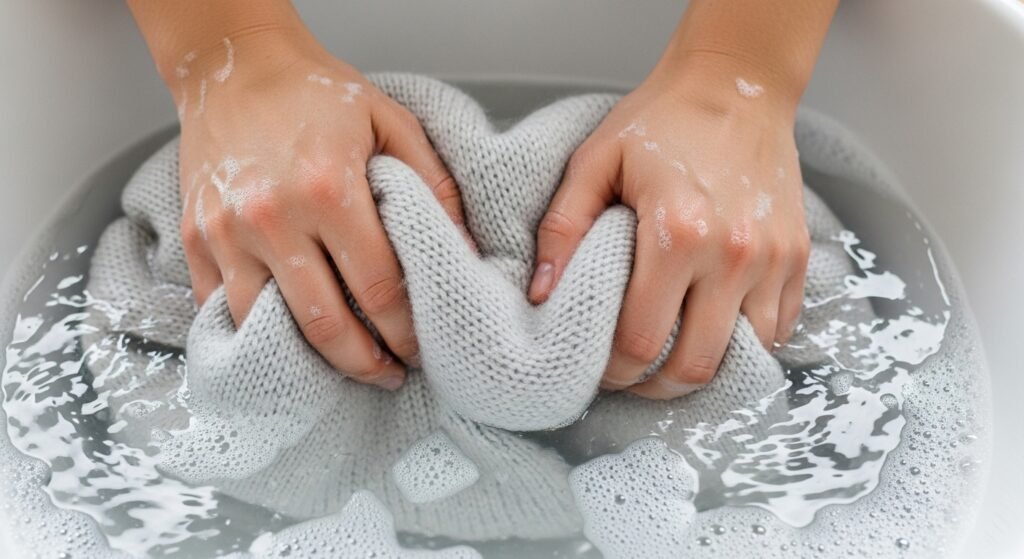
When it is finally time for a full wash, hand washing wool is the gold standard. It prevents felting—the chemical reaction where heat and friction cause the tiny scales on keratin fibers to lock together, resulting in permanent shrinkage.
- Prepare the Bath: Fill a clean sink or basin with tepid water. The ideal temperature is between 60°F – 80°F. It should feel neutral to the touch.
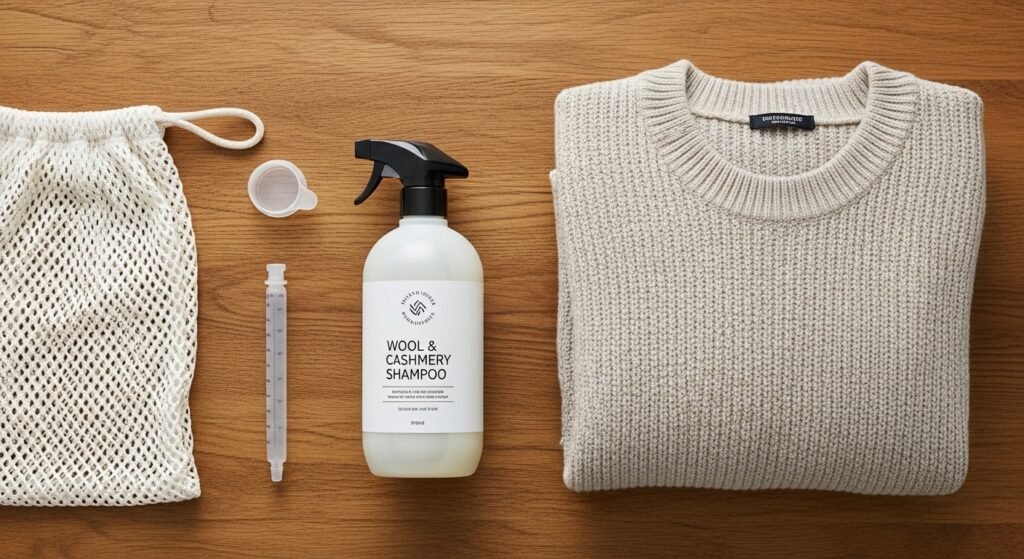
- Add the Cleanser: Pour in exactly 1 capful of a mild detergent designed for delicates, or use a no-rinse wool wash. Mix the soap into the water before adding the clothing.
- Submerge and Soak: Turn the sweater inside out to protect the outer facing side. Press it gently under the water until saturated. Let it soak for exactly 5 to 10 minutes. Do not leave it longer, as water causes the fibers to swell and weaken over time.
- The White Vinegar Rinse: Drain the soapy water and refill the basin with clean, cold water. Add 1/4 cup of white vinegar. This acts as a natural fabric softener and neutralizes any leftover alkaline detergent residue. Gently press the sweater up and down until the water runs clear.
Step 4: Method 2 – Machine Washing Wool Safely
If you are short on time and wondering how to wash a wool sweater in the washing machine, it is possible, but you must be precise. You can only do this if the care label explicitly permits it.
Always place the garment inside a breathable mesh laundry bag to protect it from catching on the machine drum. Set your machine to the delicate cycle wool setting. Ensure the water temperature is cold (never exceeding 30°C / 86°F) and manually reduce the spin speed to a maximum of 600 RPM. Fast spinning will violently stretch the wet, heavy knitwear out of shape. Washing in cold water also saves energy and protects the structural integrity of natural fibers.
Step 5: How to Dry, Block, and Iron a Wool Sweater
Understanding how to dry a wool sweater flat is where you truly prevent wool shrinking. Hanging a wet sweater will cause the shoulders to droop to your waist, and a tumble dry machine will shrink it to a child’s size in minutes.
The Towel Roll Water Extraction
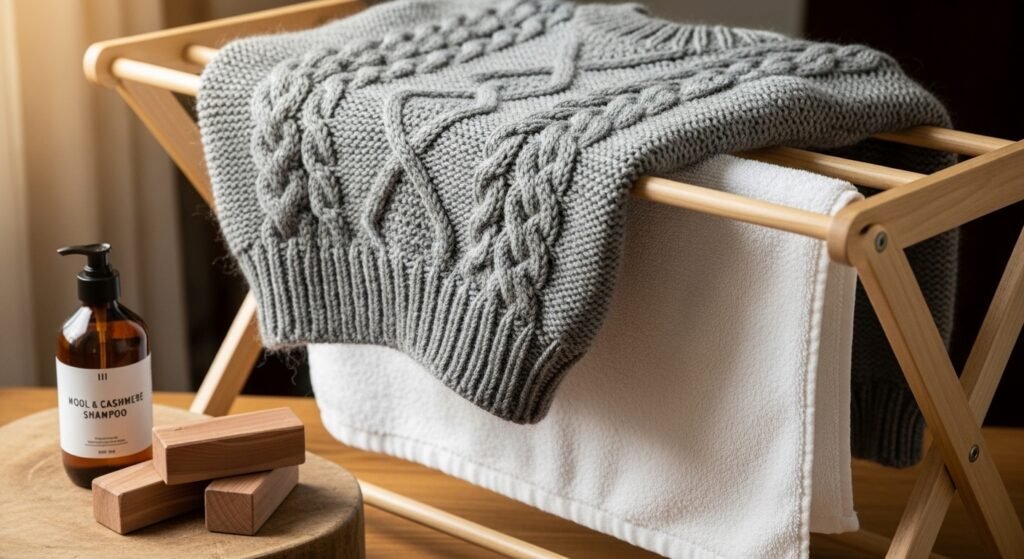
Take the dripping wet sweater and lay it flat on top of 2 heavy-duty towels. Starting from the bottom hem, roll the towels and the sweater up together tightly, like a sleeping bag. Press down firmly on the roll. The dry towels will safely absorb the excess water. Never wring or twist the fabric.
Blocking and Pinning
Unroll the sweater and transfer it to a dry towel or a mesh drying rack. Now you must reshape (or block) the garment. Gently pat the sleeves into place and square off the shoulders. For highly structured garments, you can use rust-proof T-pins to pin the edges of the sweater down to a foam blocking mat. Place it in a well-ventilated room away from direct sunlight. Expect the drying process to take 24 to 48 hours.
Safe Ironing (The Steaming Trick)
If your sweater dries with severe wrinkles, never press a hot iron directly onto the wool, as this will crush the fibers and leave shiny burn marks. Instead, set your iron to the “wool” or “steam” setting and hover it an inch above the fabric, allowing the steam to gently relax the wrinkles.
The Emergency Room: Wool Sweater Fixes
Case Study: How to Unshrink a Wool Sweater
Did you accidentally wash your favorite piece in hot water? If the fabric has experienced severe shrinking, there is a rescue method.
Fill a basin with cool water and add 3 tablespoons of rich hair conditioner. Submerge the shrunken sweater and let it soak for 20 minutes. The conditioner lubricates the tightly locked fibers. Without rinsing, roll it in a towel to remove excess water. Lay it on a corkboard or heavy foam board, and gently stretch the fabric back to its original dimensions, using heavy-duty pins to hold it in place while it dries.
Removing Pilling
Over time, friction causes tiny balls of fuzz to form under the arms. This is called pilling. Lay the garment flat and gently glide a sweater stone or a specialized fabric shaver over the surface to cleanly cut the pills away, restoring the smooth finish.
How to Store Wool Sweaters to Prevent Damage
Proper wool care instructions include seasonal storage. Never store a sweater without washing it first; microscopic skin cells and food particles are what actually attract clothes moths.
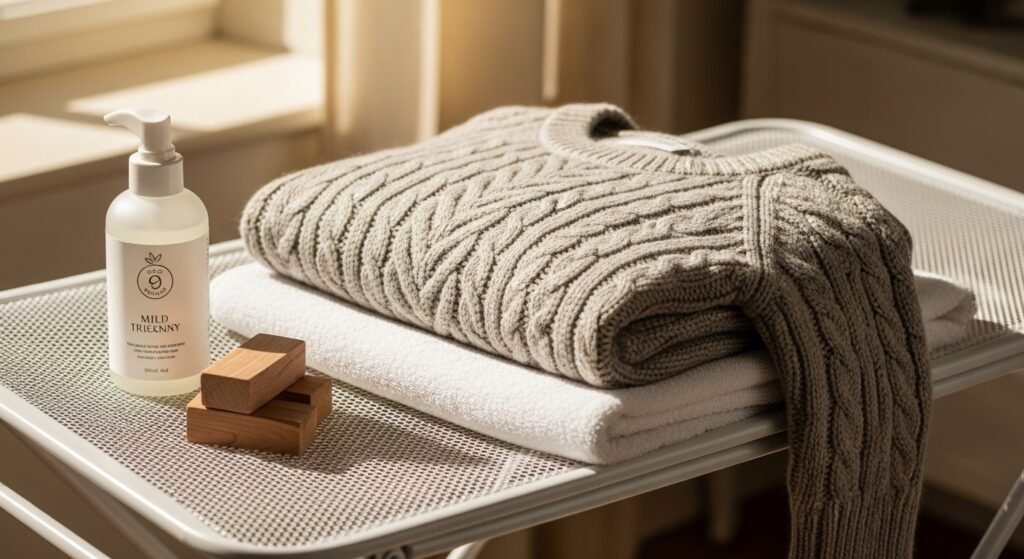
Fold the sweaters neatly—never hang them for long periods. Place them in breathable cotton storage bags alongside natural cedar blocks. The strong aroma of natural cedar safely repels moths and keeps your wardrobe smelling fresh for the next winter season.
Frequently Asked Questions (FAQ)
What temperature to wash wool?
Always use cool or tepid water. The absolute maximum temperature you should expose your knitwear to is 30°C / 86°F. Heat causes the natural protein scales in the yarn to lock together, resulting in shrinkage.
Can I use regular laundry detergent on wool?
No. Standard laundry detergents contain strong enzymes designed to break down protein-based stains like food and sweat. Because wool itself is made of protein, these enzymes will literally eat away at the fibers, causing microscopic holes. Always use a dedicated gentle laundry detergent.
How to wash wool without shrinking?
The secret is avoiding heat and friction. Use room-temperature water (60°F – 80°F), implement the rule of 0 Agitation (do not scrub or twist), and always lay the garment flat to dry naturally.
Go to Sac Biz News for more quality, informative content.