

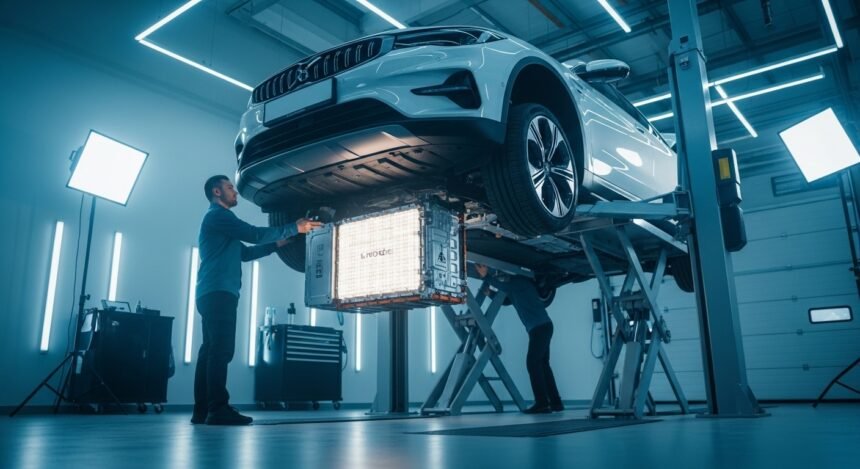
Tesla Battery Replacement Cost: Exact Prices, Warranties, & What You Need to Know
The tesla battery replacement cost is often the single biggest fear for both current owners and anyone considering buying a used EV. When you transition from a gas-powered vehicle to an electric one, you leave behind oil changes, transmission failures, and spark plugs. However, you inherit a massive, high-tech energy source beneath your floorboards. If that energy source fails out of warranty, the financial impact can be significant.
- How Much Does a Tesla Battery Replacement Cost? (By Model)
- Tesla Replacement Cost Comparison Table
- Tesla Model 3 Battery Replacement Cost
- Tesla Model Y Battery Replacement
- Tesla Model S Battery Cost
- Tesla Model X Battery Replacement
- The Science of Battery Degradation: The “20k Mile Drop”
- How Charging Habits and Climate Affect Battery Lifespan
- The Battery and Drive Unit Warranty Explained
- Out-of-Warranty Options & Third-Party Protection
- How a New Battery Affects Resale Value
- The Final Invoice: Parts, Labor, and Core Charges
- Brand-New vs. Remanufactured Tesla Batteries
- How to Tell if Your Tesla Battery is Failing
- The Final Verdict on EV Battery Costs
If you are looking for the bottom line right now: a complete battery replacement costs between $11,000 and $23,000+ when paying completely out of pocket.
This total out-of-pocket EV battery cost depends entirely on the model you drive, the size of the battery pack, and whether Tesla installs a brand-new or a remanufactured unit. The High Voltage (HV) battery pack itself usually accounts for $7,000 to $15,500 of that price, while specialized Tesla labor and miscellaneous parts make up the rest.
In this comprehensive guide, we are going to break down the exact cost to replace a Tesla battery, explore the deep technical details of battery degradation curves, explain the life-saving standard warranty, and look at the realistic lifespan of these incredible machines.
How Much Does a Tesla Battery Replacement Cost? (By Model)
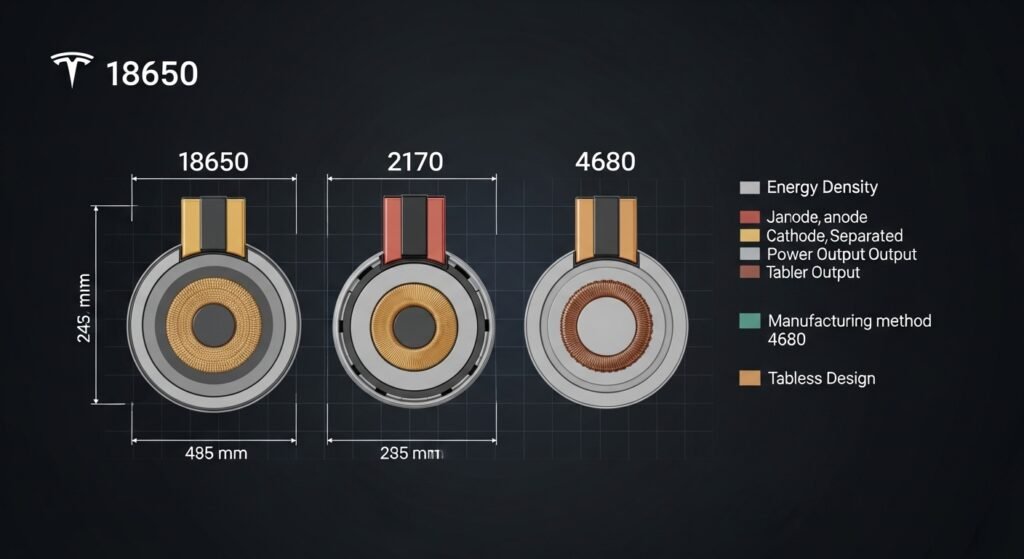
When analyzing the Tesla battery replacement price, you cannot use a one-size-fits-all number. A lightweight daily commuter car will not cost the same to fix as a heavy, high-performance luxury SUV. Tesla utilizes different battery sizes ranging from 40 kWh to 100 kWh, and they use completely different cell formats depending on the year and model.
Below is a detailed breakdown of the cost of Tesla battery replacements by specific model, using recent data from out-of-warranty service invoices.
Tesla Replacement Cost Comparison Table
| Tesla Model | Estimated Battery Pack Cost | Estimated Labor & Parts | Total Estimated Cost | Common Cell Format |
| Model 3 | $7,000 – $13,500 | $500 – $1,500 | $11,000 – $15,800 | 2170 cells / 4680 cells |
| Model Y | $8,000 – $13,500 | $500 – $1,500 | $11,000 – $15,800 | 2170 cells / 4680 cells |
| Model S | $12,000 – $15,500 | $1,000 – $2,600 | $16,000 – $23,000 | 18650 cells |
| Model X | $13,000 – $15,500 | $1,500 – $3,000+ | $17,000 – $23,000+ | 18650 cells |
Tesla Model 3 Battery Replacement Cost
The Model 3 was designed to be Tesla’s mass-market, affordable vehicle. Fortunately, that means the Tesla Model 3 battery replacement cost is generally the most affordable in the lineup. Most out-of-warranty replacements for a Model 3 range from $11,000 to $15,800 total.
The Model 3 typically utilizes a pack made of four individual battery modules filled with 2170 cells. Because the car is smaller and less complex than the flagship models, technicians can drop the old pack and install the new one with relative ease, keeping labor costs lower than older models.
Tesla Model Y Battery Replacement
Because the Model Y shares roughly 75% of its parts with the Model 3, the Tesla Model Y battery replacement process and pricing are nearly identical. You can expect to pay roughly $11,000 to $15,800.
However, it is important to note that newer Model Y vehicles feature the highly advanced 4680 cells housed in a structural battery pack. This means the battery actually forms part of the car’s structural frame. While this makes the car safer and lighter, some industry experts warn that structural packs can be more labor-intensive to replace.
Tesla Model S Battery Cost
As the flagship luxury sedan, the Model S carries a much larger battery to achieve its legendary range and acceleration. Consequently, the Tesla Model S battery cost is significantly higher.
Owners looking at an out-of-warranty replacement can expect to pay anywhere from $16,000 to
20,000 to $22,000 mark.
Tesla Model X Battery Replacement
The Model X is Tesla’s heaviest and most complex vehicle. Due to its massive size, intricate wiring, and heavy-duty drivetrain, the Tesla Model X battery replacement is often the most expensive job a service center performs.
While the battery pack itself costs roughly the same as the Model S, navigating the complex architecture of a Model X can take a technician up to 13 hours, pushing the total out-of-pocket cost well past $20,000.
The Science of Battery Degradation: The “20k Mile Drop”
A massive misconception among consumers researching the used Tesla battery cost is how battery degradation actually works. Many assume that a battery loses its charge at a steady, even pace year after year. Real-world telematics data tells a completely different story.
Tesla batteries experience what data scientists call a degradation curve. During the first 20,000 miles of driving, your battery will likely lose about 5% to 10% of its original maximum range. This initial drop panics many new owners. However, after that initial 20,000-mile break-in period, the degradation curve completely plateaus.
For the next 100,000 miles or more, the range degradation slows down to an absolute crawl, often losing less than 1% of capacity per year. Understanding this curve prevents unnecessary worry and proves that a slight drop in range does not mean your battery is failing.
How Charging Habits and Climate Affect Battery Lifespan
Why do some Tesla batteries easily last 300,000 to 500,000 miles, while others fail right after the warranty expires? The answer lies in how the owner treats the vehicle. Two massive factors heavily influence your battery capacity and overall health: Supercharging heat and extreme climates.
The Impact of Supercharging Heat
Tesla’s Supercharger network is incredible for road trips, but relying on Level 3 DC fast charging every single day is detrimental to lithium-ion chemistries. Pushing massive amounts of electricity into the battery generates extreme heat. Over time, this heat stresses the internal components of the battery pack, accelerating capacity fade. For maximum longevity, owners should rely on slower Level 2 home charging for daily use and save Supercharging for long trips.
The Climate Factor
Just like a smartphone, EV batteries hate extreme temperatures. Telematics data proves that Teslas driven in consistently hot climates (like Arizona or Nevada) tend to experience faster battery degradation than those driven in moderate climates. The heat forces the vehicle’s thermal management system to work overtime. If you live in a hot climate, keeping your Tesla plugged in while parked in the shade allows the car to run its cooling systems using wall power rather than draining the battery.
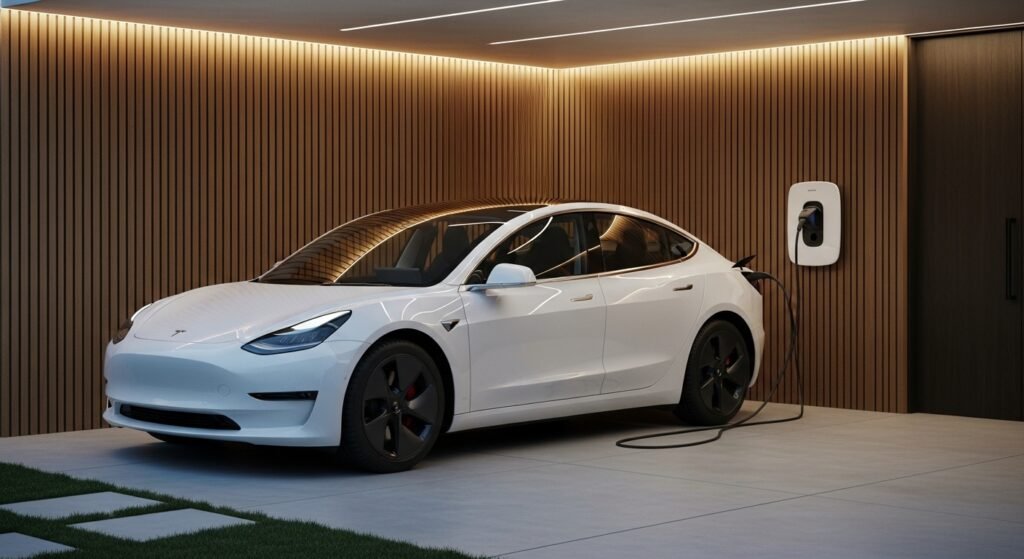
The Battery and Drive Unit Warranty Explained
Most people reading about the terrifying how much does it cost to replace a Tesla battery out of pocket reality will never actually have to pay a single dime of it. Tesla provides one of the most robust powertrain warranties in the automotive industry.
It is officially called the Battery and Drive Unit Limited Warranty. This is a crucial distinction. It means that not only is your high-voltage battery covered, but the electric motors (drive units) that propel the car are also fully protected.
The 8-Year Standard Warranty Limits
Every new Tesla comes with a standard 8 years high-voltage battery warranty. The mileage limit changes based on the model you purchased:
- Model 3 & Model Y (Standard Range): 8 years or 100,000 miles.
- Model 3 & Model Y (Long Range & Performance): 8 years or 120,000 miles.
- Model S & Model X: 8 years or 150,000 miles.
The 70% Retention Guarantee
Tesla offers a 70% retention guarantee. If your battery drops below 70% of its original factory capacity before your warranty period expires (meaning it suffers more than a 30% capacity loss), Tesla considers the battery defective. They will replace it with a remanufactured pack absolutely free of charge. Furthermore, this warranty is fully transferable to subsequent owners, making buying a used EV much less risky.
Out-of-Warranty Options & Third-Party Protection
What happens if you are out of warranty, your car breaks down, and Tesla hands you an invoice for $16,000? Do you have any other options?
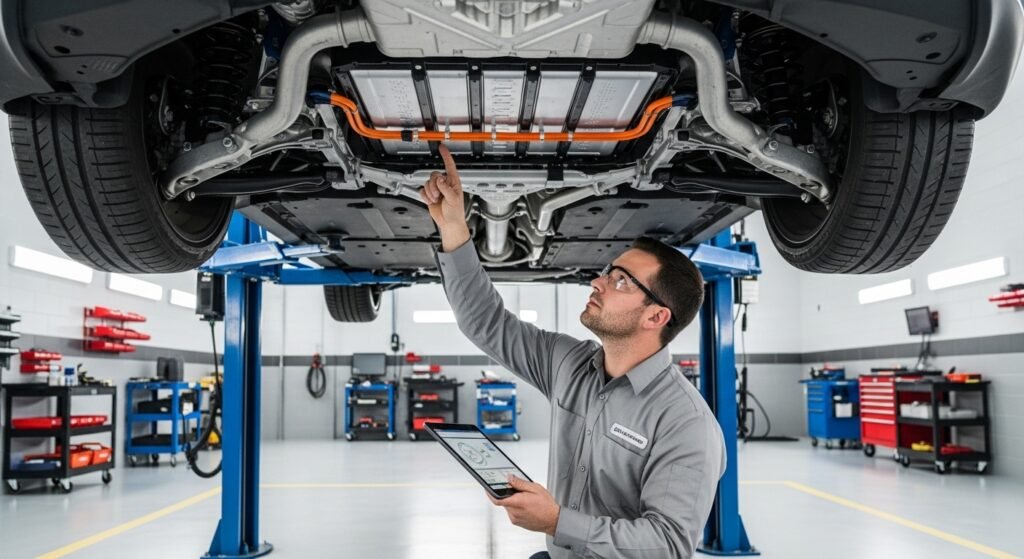
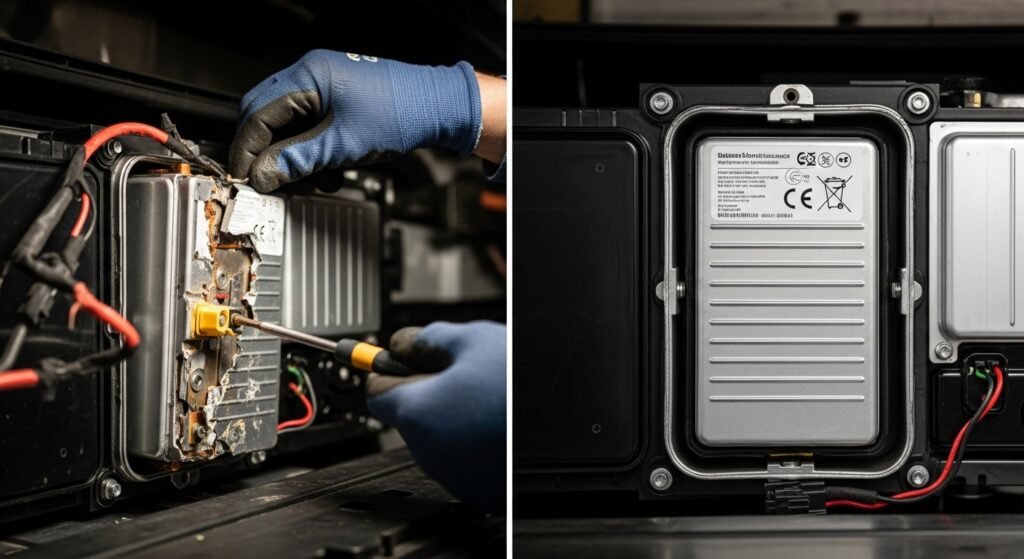
The growing EV aftermarket is finally providing alternatives to massive out-of-pocket costs. Independent third-party EV repair shops are pioneering the art of micro-repairs. When Tesla services your car, their policy is to replace the entire massive battery pack. However, an EV battery is made up of thousands of cells grouped into several large battery modules.
Often, an entire battery pack will fail just because a tiny cluster of cells inside one single module went bad. Third-party shops have figured out how to open the battery pack, diagnose the exact location of the cell imbalance, and replace a single module for roughly $5,000 to $7,000.
Third-Party Extended Warranties:
Additionally, companies are now stepping up to offer specialized EV extended warranties. If your factory warranty is nearing expiration, you can purchase aftermarket protection plans specifically designed to cover the high-voltage battery and drive unit. Paying a small monthly premium for an extended warranty is often much easier to swallow than a sudden $20,000 repair bill.
How a New Battery Affects Resale Value
A fascinating aspect of the Tesla battery replacement cost is how it alters the financial landscape of the used car market.
“A brand new battery does not make your used Tesla worth $15,000 more, but it completely removes the buyer’s hesitation, making the car incredibly easy to sell.” — Used EV Market Analyst
If you spend $15,000 replacing the battery on a used Tesla Model S, the market value of the car does not magically increase by $15,000. Kelley Blue Book and other valuation tools only give a slight premium for a newly replaced battery. However, in the private market, a used Tesla with paperwork proving it has a freshly replaced battery will sell significantly faster than identical models. Buyers are terrified of out-of-warranty battery failures, so buying a car with a fresh remanufactured pack gives them immense peace of mind.
The Final Invoice: Parts, Labor, and Core Charges
To truly understand how much is a Tesla battery, you have to look at a Tesla Service Center invoice like an accountant.
Currently, the industry average for a replacement EV battery sits between $139 to $180 per kWh. These packs are filled with advanced chemistries like NCA (Nickel Cobalt Aluminum), NMC (Nickel Manganese Cobalt), or LFP (Lithium Iron Phosphate). Tesla does not outsource its official warranty work; you must go to a Tesla Service Center.
Tesla labor rates generally fall between $175 and
500 to $2,600+. You will also see a diagnostic fee and charges for miscellaneous parts covering fresh coolant and heavy-duty connectors.
The “Core Charge” Explained
If you look closely at a quote to replace your battery, you will notice a massive deduction at the very bottom called the core charge. When Tesla installs a new or remanufactured battery in your car, they keep the old, dead battery. The materials inside a dead battery—lithium, cobalt, nickel—are incredibly valuable. They send it back to their factories to be recycled or refurbished. By giving them your old battery, they discount your invoice by thousands of dollars.
Brand-New vs. Remanufactured Tesla Batteries
A major point of confusion for consumers searching for repair prices is the condition of the replacement pack. When you get a battery replaced by Tesla, you are almost never getting a brand-new battery pack. Instead, Tesla utilizes a remanufactured battery (a refurbished pack).
A remanufactured battery is a previously used housing where engineers have removed the faulty modules and replaced them with healthy ones. A remanufactured battery generally runs between $11,000 and
20,000 and $28,000, which is why they are rarely used for routine replacements.
How to Tell if Your Tesla Battery is Failing
Before panicking about the cost of a remanufactured Tesla battery, it is important to know the actual symptoms of a failing High Voltage system. A battery rarely dies completely without giving you advanced warning.
Modern Teslas are managed by a highly intelligent Battery Management System (BMS). When the BMS detects an internal issue, it will flash specific error codes on your main dashboard screen. The two most dreaded error codes are BMS_a066 and BMS_u029. These codes indicate that the maximum battery charge level is reduced or the vehicle may not restart. It means the system has detected a critical internal failure, such as a coolant leak inside the battery pack. At this point, the car is protecting itself from catching fire or causing further electrical damage.
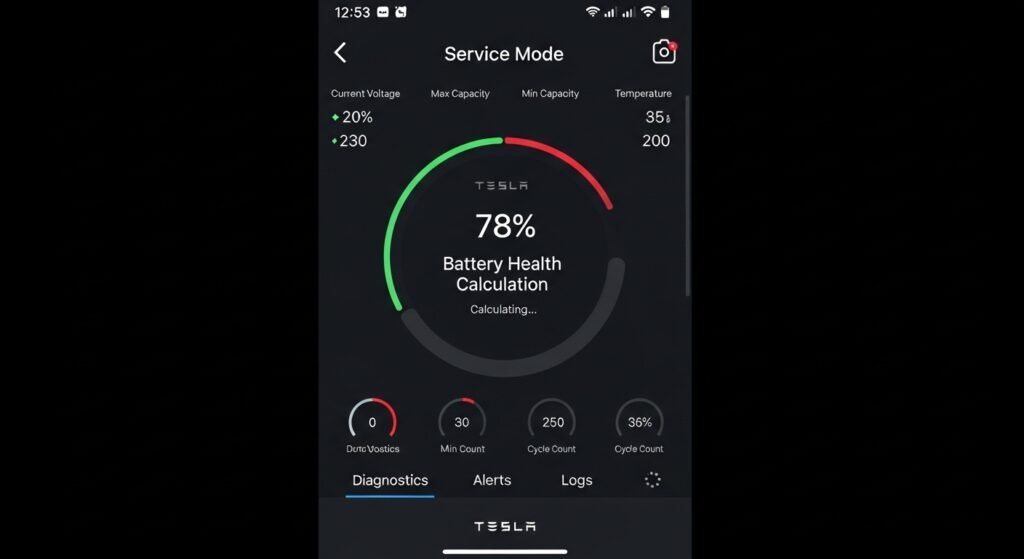
If you are worried about degradation, you can use the vehicle’s software. By putting the car into Service Mode, you can run a comprehensive Battery Health Test. This test drains the battery entirely and recharges it, calculating the exact percentage of battery health remaining.
The Final Verdict on EV Battery Costs
Understanding the what you need to know about Tesla battery replacement reality is crucial for responsible EV ownership. While an out of pocket EV battery cost hovering between $11,000 and $23,000+ is certainly an intimidating figure, it is heavily mitigated by the exceptional standard warranty, third-party repair options, and the fact that most packs will easily push past 300,000 miles.
By practicing good charging habits, limiting unnecessary Supercharging heat, and understanding how your vehicle’s degradation curve works, you can virtually guarantee that the original battery placed in your car at the factory will be the only one you ever need.
Go to Sac Biz News for more quality, informative content.