


How long does it take to get a CDL? For most people in 2026, the answer is 4 to 10 weeks from start to finish. Full-time training programs typically take 3 to 8 weeks, with an average around 5 to 7 weeks. Some drivers finish even faster with intensive or company-sponsored programs, while part-time options can stretch to several months.
- Realistic Timelines: How Long Does CDL Training Really Take?
- 7 Key Factors That Determine Your CDL Timeline
- Step-by-Step Process to Get Your CDL
- Full-Time vs Part-Time Training: Which Should You Choose?
- CDL Training Costs in 2026
- State Variations & Real Examples
- Fastest Ways to Get Your CDL + Pro Tips
- Common Myths vs Reality
- Life After Getting Your CDL
- Frequently Asked Questions
- Final Thoughts
This comprehensive guide pulls together the latest requirements, real-world timelines, costs, and expert strategies so you can plan your move into trucking with confidence. Whether you’re aiming for a Class A CDL or exploring paid training, here’s exactly what to expect.
Realistic Timelines: How Long Does CDL Training Really Take?
CDL training duration varies based on your schedule and program. Full-time students often complete training in 4–8 weeks, while the entire process — including your Commercial Learner’s Permit (CLP) and skills test — lands between 4 and 10 weeks for most.
- Fastest path: 3–5 weeks (intensive full-time + quick test scheduling)
- Average full-time: 5–7 weeks
- Part-time: 2–6 months
- Maximum: Up to 6 months (with delays or part-time)
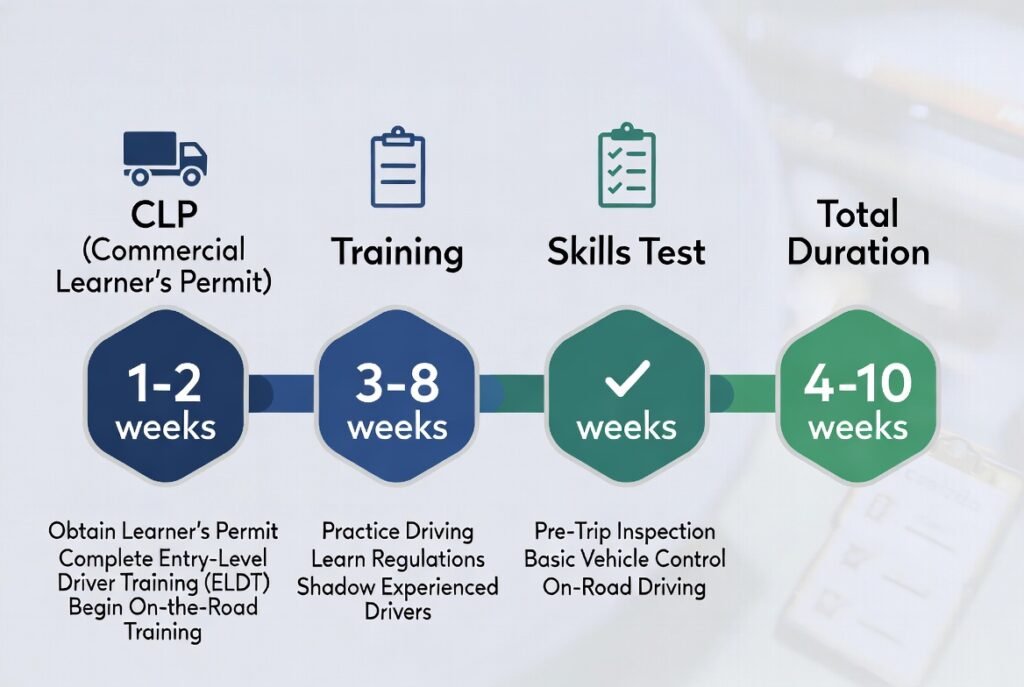
Schneider reports an average of about 7 weeks for full-time programs, while accelerated options can hit the road in as little as 3 weeks.
| Program Type | Training Duration | Total Timeline | Best For |
|---|---|---|---|
| Full-Time Accelerated | 3–6 weeks | 4–8 weeks | Quick career changers |
| Standard Full-Time | 5–8 weeks | 6–10 weeks | Most new drivers |
| Part-Time / Evenings | 8–16 weeks | 3–6+ months | Working professionals |
| Company-Sponsored | 5–7.5 weeks | 6–9 weeks | Low or no upfront cost |
7 Key Factors That Determine Your CDL Timeline
Understanding these factors — many highlighted by top competitors — helps you control your speed:
- Training Schedule — Full-time (5 days/week) is fastest. Part-time doubles or triples the time.
- CDL Class — Class A usually takes longest; Class B or C can be shorter.
- Endorsements — Adding Hazmat (H), Tanker (N), Passenger (P), or others requires extra training and testing.
- Prior Experience — Experienced heavy vehicle drivers often finish quicker.
- State & Test Availability — DMV backlogs and the 14-day CLP waiting period in many states add time.
- School Quality — Reputable programs with high pass rates move students through efficiently.
- Personal Commitment — Consistent study and practice prevent retakes.
Unique insight from competitors: Classroom time typically makes up about one-third of training, with the rest focused on yard and road practice.
Step-by-Step Process to Get Your CDL
Here’s the proven path used by successful drivers:
Step 1: Meet Basic Requirements Be at least 18 (intrastate) or 21 (interstate), hold a valid driver’s license, pass a DOT physical, and clear a drug screen.
Step 2: Get Your Commercial Learner’s Permit (CLP) Study the state handbook and pass written tests. This takes 1–2 weeks. Hold it for at least 14 days before the skills test in most states.
Step 3: Complete Mandatory ELDT Training Finish FMCSA-approved Entry-Level Driver Training (theory + behind-the-wheel). This is required for first-time Class A/B applicants. Official FMCSA ELDT Information
Step 4: Enroll in CDL Training Learn pre-trip inspections, backing maneuvers, shifting, and on-road driving. Quality schools like those mentioned by competitors emphasize hands-on practice.
Step 5: Pass the CDL Skills Test Three parts: pre-trip, basic control (backing), and on-road driving. Schedule promptly after training.
Step 6: Receive Your CDL Once passed, you’re licensed and ready to work.
Full-Time vs Part-Time Training: Which Should You Choose?
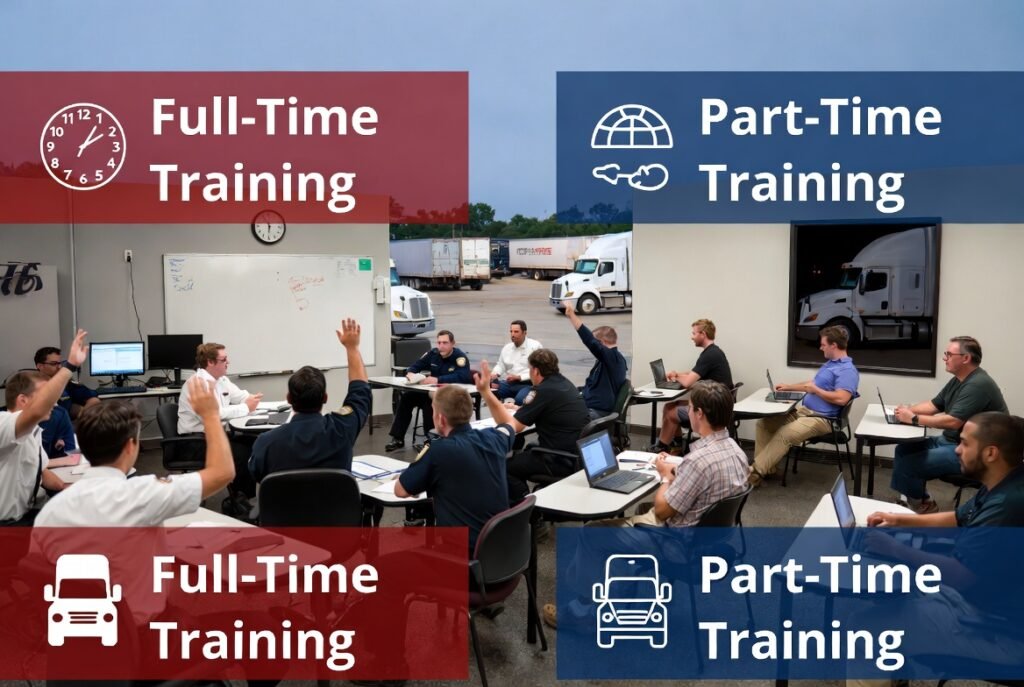
Full-time programs deliver the fastest results and better skill retention through daily repetition. Many run Monday–Friday for 5–8 weeks.
Part-time suits those who need to keep working. Expect longer timelines but greater flexibility.
Company-sponsored options (e.g., Schneider’s paid training) often combine structure with employment and last 5 to 7.5 weeks.
CDL Training Costs in 2026
Expect to invest $3,000–$10,000 total. Private schools typically charge $4,000–$8,000, while some company programs cost $0 upfront with a service agreement. Texas programs often range $4,000–$9,000.
Factor in licensing fees, physical exams, and study materials. Many students recover costs within the first few months of driving.
State Variations & Real Examples
- California: 4–10 weeks total with strong local school support.
- Texas: Similar timelines with detailed multi-step processes emphasized by local providers.
Check your state DMV for exact rules, as availability varies.
Fastest Ways to Get Your CDL + Pro Tips
To finish quickly:
- Choose full-time or paid apprenticeship programs.
- Prepare thoroughly for the CLP test.
- Practice daily and book your skills test early.
- Consider hybrid online + in-person options gaining popularity in 2026.
Roadmaster and similar schools note that dedicated students often complete training in about one month.
Common Myths vs Reality
Myth: You can get a CDL in one week. Reality: Rushed programs rarely produce job-ready drivers.
Myth: All schools are the same. Reality: Pass rates and job placement vary widely.
Life After Getting Your CDL
New drivers usually complete company orientation and start earning within weeks. The industry offers strong demand, competitive pay, and various routes (OTR, regional, local).
Frequently Asked Questions
How long does it take to get a Class A CDL?
Typically 4–8 weeks full-time.
What is the 14-day CLP rule?
Required waiting period before skills test in most states.
How much does CDL training cost?
$3,000–$10,000 on average.
Can I work while getting my CDL?
Yes, with part-time programs.
Is ELDT training mandatory?
Yes, for most first-time applicants.
Final Thoughts
How long does it take to get a CDL depends on your choices, but most determined students are licensed and working within 1–3 months. The combination of solid training, proper planning, and commitment leads to success.
Ready to start? Research local schools, explore paid training programs, and take the first step toward a stable trucking career. The road is calling — and it could be sooner than you think.
Go to Sac Biz News for more quality, informative content