


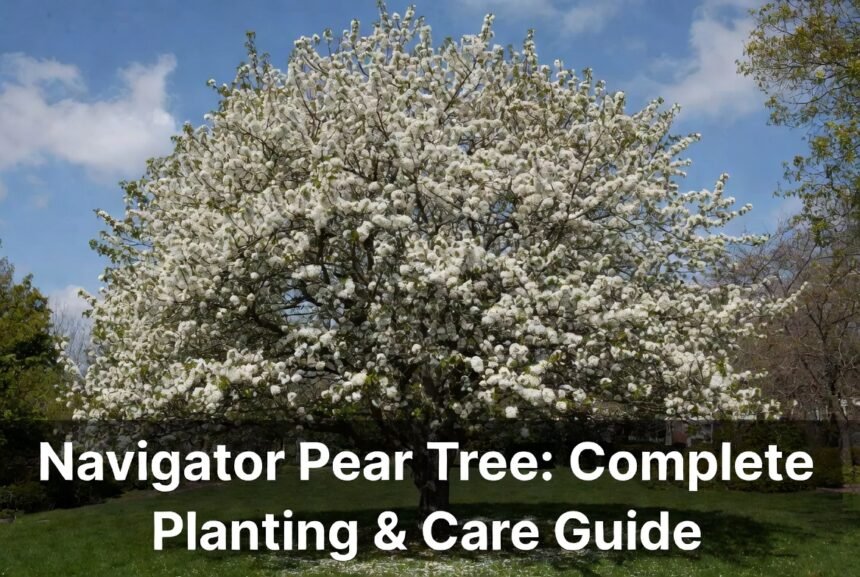
Navigator Pear stands out as a versatile, cold-hardy tree that delivers beautiful spring blooms, attractive foliage, and a neat upright shape ideal for today’s landscapes. Gardeners in northern regions especially appreciate this Navigator Pear Tree as a cleaner, stronger alternative to older ornamental pears.
- What Is a Navigator Pear Tree?
- Navigator Pear Tree Characteristics & Appearance
- Hardiness Zones and Climate Suitability
- Planting Navigator Pear Tree – Step-by-Step Guide
- Navigator Pear Tree Care and Maintenance
- Soil, Sunlight, and Fertilization Requirements
- Pests, Diseases, and Common Problems
- Navigator Pear vs Bradford Pear
- Landscape Uses and Design Ideas
- Harvesting and Edible Uses (For Fruiting Variety)
- Buying Guide: Where to Buy Navigator Pear Trees
- Common Mistakes to Avoid When Growing Navigator Pear
- Seasonal Care Calendar for Navigator Pear Tree
- Frequently Asked Questions (FAQs)
- Conclusion
This complete guide covers both the popular ornamental Navigator Pear (Pyrus ‘DurPSN303’) and the fruiting type (Pyrus communis ‘Navigator’), so you can choose the right one for your needs and grow it successfully.
What Is a Navigator Pear Tree?
The Navigator Pear includes two main types that often cause confusion. The ornamental version (Pyrus ‘DurPSN303’) is a pyramidal ornamental pear prized for landscaping. It features showy white flowers, excellent fall color, and very little fruit. The fruiting variety (Pyrus communis ‘Navigator’) is a European-style pear developed for crisp, sweet fruit in colder climates.
This cold hardy pear tree was bred for tough conditions and offers strong performance in northern gardens.
Navigator Pear Tree Characteristics & Appearance
The Navigator Ornamental Pear grows into a dense, refined pyramidal form with a low canopy. It typically reaches about 26 feet tall with a 13-foot spread at maturity, though some sources list a more compact 12-15 feet tall and 8-10 feet wide for the fruiting type.
Key features include:
- Flowers: Stunning clusters of white blooms with pink anthers in mid-spring.
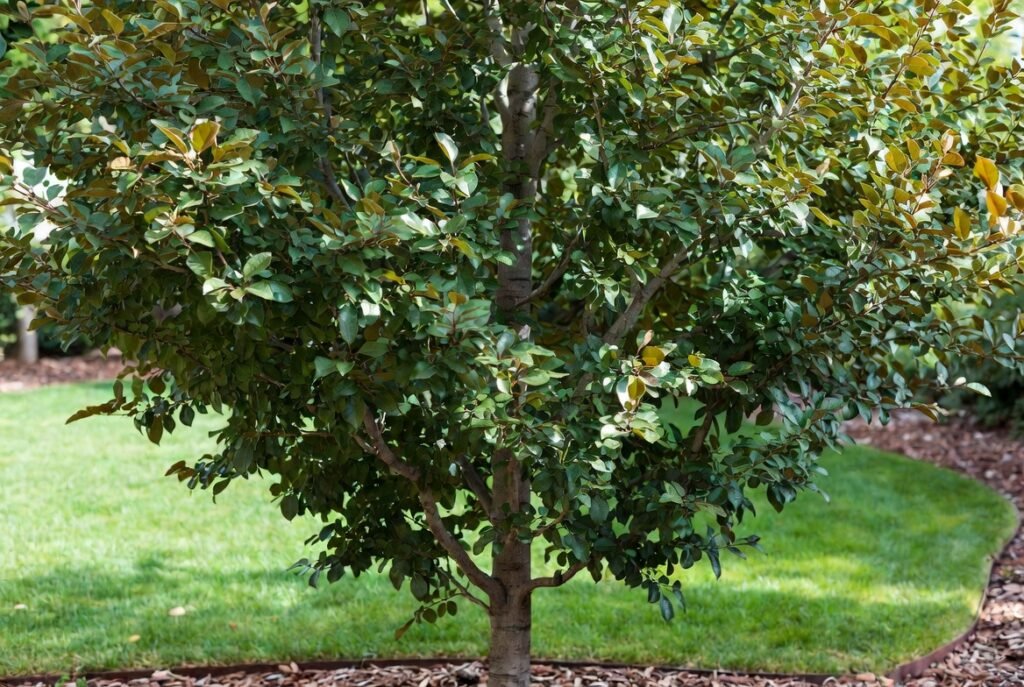
- Foliage: Glossy, heart-shaped dark green leaves.
- Fall Color: Outstanding yellow to red autumn display.
- Fruit: Rarely fruits in the ornamental form, making it low-mess. The fruiting type produces golden-yellow, bell-shaped pears.
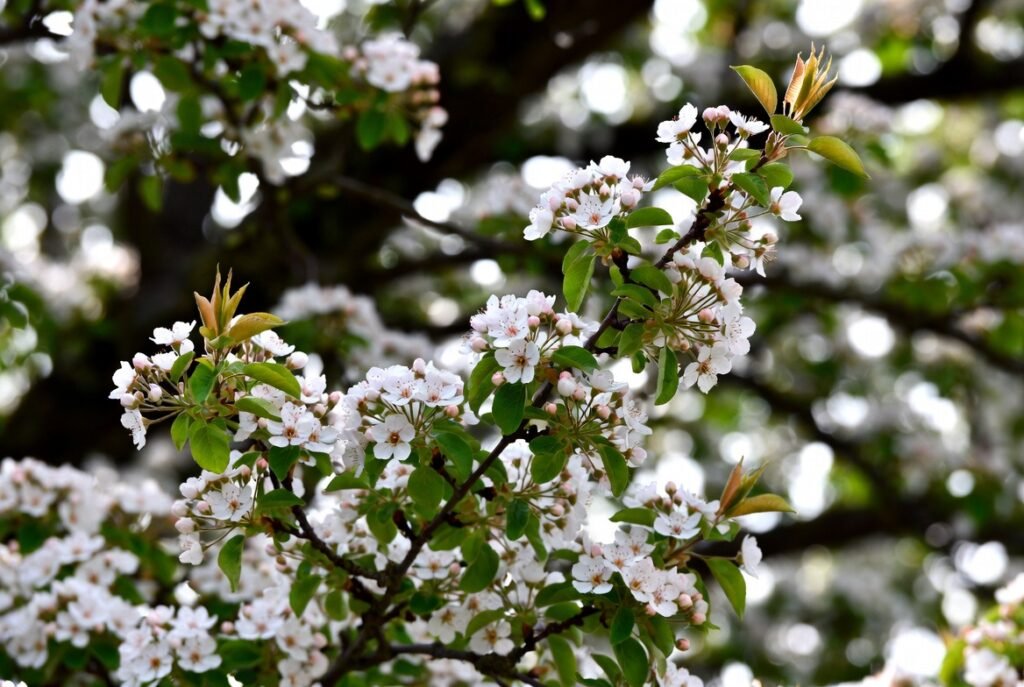
It grows at a fast rate and can live 50 years or more with good care. Its upright narrow tree shape makes it perfect for small spaces and vertical accent planting.
Hardiness Zones and Climate Suitability
The Navigator Pear excels in USDA Zone 2a to Zone 7. It tolerates winter lows down to -30°F and requires 800-1000 chill hours for proper flowering and fruiting in the edible variety. It handles urban pollution well and thrives even in inner-city environments.
Planting Navigator Pear Tree – Step-by-Step Guide
Plant in full sun with at least 6-8 hours of direct sunlight daily. Choose well-draining loamy soil with pH 6.0-7.0. Space trees 15-20 feet apart.
Best planting time: Early spring or fall. Dig a hole twice as wide as the root ball but no deeper. Position the root flare at or slightly above ground level. Backfill with native soil and water deeply. Apply 3-4 inches of organic mulch, keeping it 6 inches away from the trunk.
Navigator Pear Tree Care and Maintenance
Navigator Pear care remains relatively straightforward. Water new trees every 5-7 days during the first season. Established trees need about 1-2 inches of water weekly. Prune in late winter while dormant to maintain shape and improve air circulation.
Fertilize in early spring with a balanced 10-10-10 formula at a rate of about 1 pound per inch of trunk diameter. Stop fertilizing by mid-July.
Soil, Sunlight, and Fertilization Requirements
Full sun produces the best flowers and fall color. The tree adapts to various soils but performs best in rich, well-draining loam. Amend heavy clay with compost and sand in a 2:1:1 ratio. Watch for iron deficiency in alkaline soils, which shows as yellow leaves with green veins.
Pests, Diseases, and Common Problems
Monitor for fire blight, codling moth, pear psylla, and pear scab. The ornamental type shows good fire blight resistance. Prune infected branches 8-12 inches below symptoms and disinfect tools with a 10% bleach solution.
Common issues include poor fruit set (often due to lack of a pollinator like Bartlett), yellowing leaves from overwatering or poor drainage, and premature fruit drop from inconsistent moisture.
Navigator Pear vs Bradford Pear
The Navigator Pear serves as a much better alternative to Bradford Pear in many regions.
| Feature | Navigator Pear | Bradford Pear |
|---|---|---|
| Hardiness Zones | 2a–7 | 5–9 |
| Fruit Drop | Minimal | Heavy and messy |
| Branch Structure | Strong, upright | Weak, prone to storm damage |
| Fall Color | Yellow to red | Red-orange |
| Maintenance | Low | Higher due to cleanup |
Landscape Uses and Design Ideas
Use the Navigator Ornamental Pear as an accent, shade, or vertical accent tree. Its conical shape and low canopy (clearance of about 3 feet) make it suitable under power lines in some cases. It works well in urban settings thanks to high pollution tolerance.
Harvesting and Edible Uses (For Fruiting Variety)
The fruiting Navigator Pear produces crisp, sweet golden-yellow pears. It needs a compatible pollinator planted within 50 feet. Harvest when fruits reach full size and begin to soften slightly.
Buying Guide: Where to Buy Navigator Pear Trees
Purchase healthy trees with straight trunks from reputable nurseries specializing in cold-hardy plants. Container-grown trees transplant easily.
Common Mistakes to Avoid When Growing Navigator Pear
- Planting too deep, which causes crown rot
- Over-fertilizing with nitrogen, leading to poor fruit production
- Inconsistent watering during fruit development
- Placing mulch against the trunk
Seasonal Care Calendar for Navigator Pear Tree
- Spring: Plant new trees, apply fertilizer, and enjoy blooms.
- Summer: Water consistently and check for pests.
- Fall: Appreciate fall color and apply fresh mulch.
- Winter: Prune dormant branches.
Frequently Asked Questions (FAQs)
Is Navigator Pear fruit edible?
Yes for the fruiting variety. Ornamental types produce very little fruit.
How fast does Navigator Pear grow?
It grows fast once established and can live 50 years or more.
Does it need a pollinator?
Fruiting types usually require cross-pollination from another European pear.
Is it messy?
No. The ornamental version rarely fruits and stays very clean.
Conclusion
The Navigator Pear Tree combines beauty, extreme cold hardiness, and low maintenance in one excellent package. Its pyramidal form, spring flowers, vibrant fall color, and urban tolerance make it a top choice for northern landscapes and a smarter alternative to Bradford Pear.
Ready to plant? Visit trusted resources like University of Minnesota Extension for more regional pear growing advice: Growing Pears in the Home Garden. You can also explore options at the Missouri Botanical Garden plant finder for similar ornamental trees.
Add a Navigator Ornamental Pear or fruiting variety to your yard this season for years of reliable beauty and performance.
Happy planting!
Go to Sac Biz News for more quality, informative content