

North Carolina drivers often choose window tint for privacy, comfort, and protection from sunlight. However, not every level of tint is legal on every vehicle. The state has specific rules regarding how dark window tint can be, where it can be applied, and what other requirements drivers need to follow.
- Understanding North Carolina Window Tint Requirements
- What Is Visible Light Transmission?
- Why Window Tint Laws Matter
- Front and Rear Windows Can Have Different Rules
- Factory Glass vs. Aftermarket Tint
- North Carolina Rules Can Change
- Compliance, Exceptions, and Practical Tips
- Medical Exemptions May Apply
- Tint Percentage Is Not the Only Consideration
- Ask a Professional Installer
- What Happens If Tint Is Too Dark?
- Drivers Moving to North Carolina Should Check Their Tint
- Practical Checklist for North Carolina Drivers
- Conclusion
Understanding these rules can help vehicle owners avoid traffic stops, fines, and the cost of removing or replacing illegal tint. Whether you are tinting a vehicle for the first time or buying a used car that already has tinted windows, knowing the applicable requirements is important.
Understanding North Carolina Window Tint Requirements
North Carolina’s window tint laws are primarily concerned with the amount of visible light that can pass through a vehicle’s windows. This measurement is commonly referred to as visible light transmission, or VLT.
The lower the VLT percentage, the darker the window appears. For example, a window with 20% VLT allows considerably less visible light through than a window with 50% VLT.
What Is Visible Light Transmission?
Visible light transmission measures the percentage of visible light that passes through a window and its tinting material.
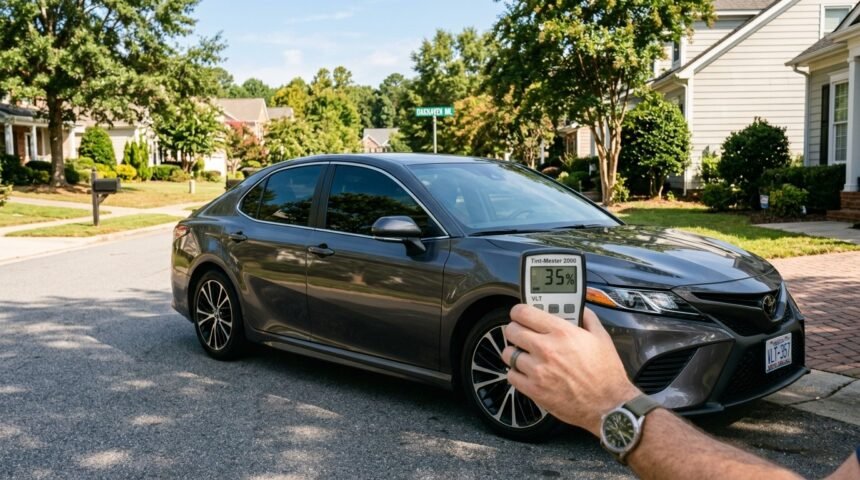
This is important because a tint that appears acceptable to the eye may still fall outside the legal limits when measured with the appropriate equipment. Drivers should therefore avoid relying only on how dark a window looks.
North Carolina has different requirements depending on the type of vehicle and the specific window being tinted. Passenger vehicles, larger vehicles, and other vehicle categories may not necessarily be subject to identical requirements.
Why Window Tint Laws Matter
Window tint regulations are intended to balance several concerns. Darker tint can reduce glare and heat inside a vehicle, but excessive tint can also make it more difficult for drivers and law enforcement officers to see through the windows.
For drivers, complying with the law can prevent unnecessary problems. A vehicle that does not meet applicable requirements may attract attention during a traffic stop, and the owner may be required to correct the violation.
Before installing new tint, vehicle owners should check the rules that apply to their particular vehicle rather than assuming that a tint percentage legal in another state will also be permitted in North Carolina.
Front and Rear Windows Can Have Different Rules
One of the most important things drivers should understand is that window tint requirements can differ depending on the location of the window.
The rules applicable to front side windows may be different from those applicable to rear side windows. Windshields can also have their own restrictions concerning tint and the location where tinting may be installed.
This means that choosing one tint percentage for every window may not be appropriate.
Drivers should consider the specific requirements for:
- The windshield
- Front side windows
- Rear side windows
- The rear window
- The type and classification of the vehicle
Factory Glass vs. Aftermarket Tint
Another issue is the difference between factory-installed tinted glass and aftermarket window film.
Some vehicles leave the manufacturer with glass that already reduces the amount of visible light entering the vehicle. Adding aftermarket film on top of factory-tinted glass can make the final result significantly darker.
For this reason, drivers should consider the combined effect of the original glass and any additional film before installing tint.
A professional tint installer should be able to explain how the selected film will affect the vehicle’s overall VLT level.
North Carolina Rules Can Change
State laws and regulations can change over time. Drivers should not assume that information found in an old forum post, social media discussion, or outdated article is still accurate.
If you are researching recent changes to North Carolina window tint laws, it is important to check current information and verify the requirements that apply to your vehicle.
Keeping up with changes is particularly important for drivers who recently moved to North Carolina, purchased a vehicle from another state, or are planning to install new tint.
Compliance, Exceptions, and Practical Tips
Knowing the general rules is only the first step. Vehicle owners should also understand how to approach tint installation, potential exemptions, and compliance issues.
Medical Exemptions May Apply
Some drivers may have legitimate medical reasons for requiring additional protection from sunlight. Depending on the applicable North Carolina requirements, certain medical conditions may qualify for an exemption from standard window tint restrictions.
However, drivers should not assume that a medical condition automatically permits darker tint. An exemption may require documentation or approval under the applicable state process.
Anyone seeking an exemption should verify the current requirements with the appropriate North Carolina authorities and keep any required documentation available.
Tint Percentage Is Not the Only Consideration
Drivers sometimes focus entirely on the darkness of their window tint. However, compliance can involve more than simply selecting a particular percentage.
Other factors may include:
- Which window has been tinted
- The type of vehicle
- The amount of light transmitted through the finished glass
- Whether the tint is aftermarket or factory-installed
- Whether the tint has reflective properties
- Whether required documentation or identification is present
Because of these factors, choosing a tint film based only on a label such as “20% tint” may not guarantee compliance.
Ask a Professional Installer
A reputable window tinting business should understand the requirements applicable to vehicles in North Carolina. Before installation, ask the installer what VLT level the finished windows are expected to have and whether the proposed film is suitable for the particular windows.
It is also useful to ask whether the installer provides documentation about the product and installation.
Drivers should be cautious about businesses that promise that any tint can be installed legally or suggest that enforcement requirements can simply be ignored.
What Happens If Tint Is Too Dark?
If law enforcement determines that a vehicle’s window tint does not comply with applicable requirements, the driver may face consequences under North Carolina law.
Depending on the circumstances, a driver may be required to correct the problem. This can mean removing the existing film and replacing it with a compliant option.
The financial cost can be frustrating because the driver may effectively pay for the tint installation twice. Checking the requirements before installation is therefore usually easier and less expensive than correcting an avoidable violation later.
Drivers Moving to North Carolina Should Check Their Tint
People who move to North Carolina from another state should pay particular attention to their vehicle’s window tint.
Tint that was legal where the vehicle was previously registered may not necessarily satisfy North Carolina requirements. New residents should review the applicable rules rather than assuming that their existing tint is automatically acceptable.
The same applies to people purchasing used vehicles. A used car may already have aftermarket tint installed, but the buyer remains responsible for operating the vehicle in compliance with applicable law.
For general legal information and additional resources, drivers can also explore Legal Expertise and review information relevant to their particular legal question.
Practical Checklist for North Carolina Drivers
Before installing or keeping tinted windows, drivers can use this simple checklist:
- Identify the type of vehicle you own.
- Determine which windows have aftermarket tint.
- Check the current North Carolina requirements for those windows.
- Find out the VLT level of the existing glass and proposed tint.
- Ask a professional installer about compliance.
- Check whether any medical exemption applies to your circumstances.
- Keep relevant documentation if an exemption or special requirement applies.
- Recheck the rules if North Carolina law changes.
Conclusion
Window tint can make driving more comfortable by reducing sunlight, glare, and heat, but vehicle owners need to make sure their tint complies with North Carolina requirements.
The most important point is that North Carolina window tint laws can depend on factors such as the type of vehicle, the specific window being tinted, and the amount of visible light transmitted through the glass. Drivers should therefore avoid choosing tint solely based on how dark it looks.
Before installing new film or purchasing a vehicle that already has tinted windows, take the time to verify the current requirements. If you are unsure whether your vehicle’s tint complies with the law, consulting a qualified professional or checking official state information can help you make an informed decision.
Staying informed is ultimately the easiest way to enjoy the benefits of window tint while avoiding unnecessary legal and financial problems.