


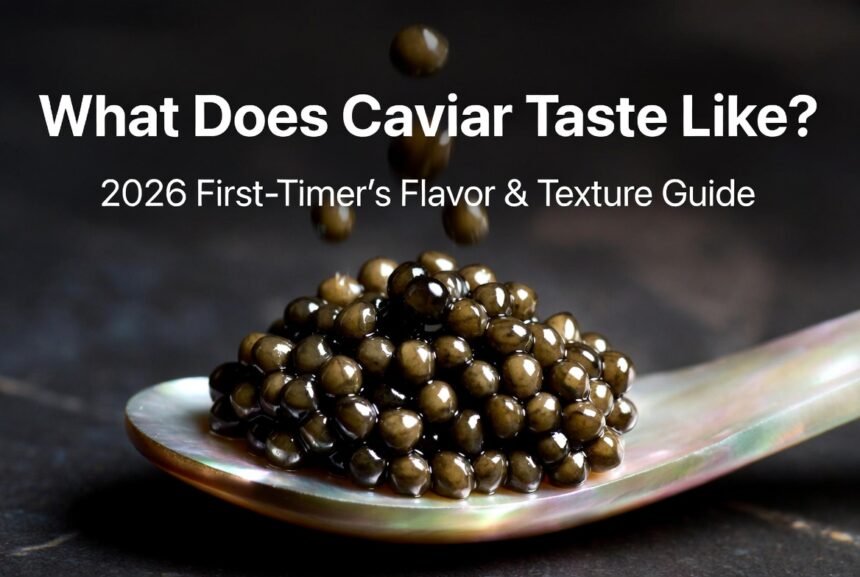
What does caviar taste like? If you’ve ever wondered this while eyeing those shimmering pearls at a luxury event or on a high-end menu, you’re in good company. Most beginners expect something intensely fishy or overly salty. The reality? Premium caviar offers a refined, clean briny ocean essence layered with rich buttery creaminess, subtle nutty depth, and a gentle umami that feels elegant rather than overwhelming. It’s like a delicate sea breeze meeting soft cheese with a whisper of sweetness — luxurious, surprising, and far more approachable than people think.
- What Is Caviar? A Quick Primer
- What Does Caviar Actually Taste Like?
- The Famous “Pop” Texture Explained
- Caviar Taste by Type – Full Comparison Table
- What Affects Caviar Taste? Key Factors
- What to Expect on Your First Bite (Exclusive First-Timer Play-by-Play)
- How to Serve Caviar for Maximum Flavor
- Common Myths & Mistakes
- Caviar Nutrition, Safety & Storage (2026 Updates)
- Best Caviar for Beginners 2026
- FAQs
- Conclusion & Next Steps
This 2026 updated guide pulls together the best insights from top-ranking sources while adding fresh, exclusive details to help you truly understand and enjoy caviar. We’ll cover exact flavor profiles, the famous popping texture, type-by-type comparisons, and practical first-timer tips that go beyond what most articles share. By the end, you’ll know exactly what to expect and how to make every bite perfect.
What Is Caviar? A Quick Primer
True caviar is the lightly salted roe of sturgeon fish. While the word “caviar” gets used broadly, authentic premium versions come exclusively from sturgeon species such as Beluga, Osetra, Kaluga, or Sevruga. Salmon roe (ikura or red caviar) is delicious but technically roe, not true caviar, and delivers a brighter, sweeter profile.
In 2026, more than 80% of global premium caviar comes from sustainable farms rather than wild sources. This shift has created more consistent flavor and reduced any earthy or muddy notes that occasionally appeared in older wild catches. The gentle malossol salting method keeps everything clean and refined. (For more on sturgeon biology, see this overview on Wikipedia.
What Does Caviar Actually Taste Like?
What does caviar actually taste like is best described as a harmonious blend of clean ocean brine, buttery richness, nutty undertones, and creamy umami with faint sweet notes. High-quality examples finish with a crisp, clean aftertaste — never metallic or overly fishy.
One detail many guides miss: the flavor can carry very light mineral or earthy hints depending on the sturgeon’s water source and diet. Premium farmed caviar in 2026 often tastes even cleaner and more consistent because of controlled environments. As a luxury food expert once noted in a tasting session, “It’s like the ocean decided to become butter.”
Does caviar taste fishy? Only in low-quality or expired products. Fresh premium caviar delivers pure, elegant sea essence instead.
How to Serve Caviar Like a True Gourmet | Social Life Magazine
The Famous “Pop” Texture Explained
The texture is what turns caviar from good to unforgettable. Premium pearls are firm yet delicate, glossy, and burst with a satisfying pop on the palate. This release floods your mouth with the full flavor in one velvety moment.
Low-quality caviar feels mushy or rubbery. The perfect burst on tongue is what makes the experience luxurious. Sustainable farming improvements in 2026 have made this texture even more reliable across batches.
Caviar Taste by Type – Full Comparison Table
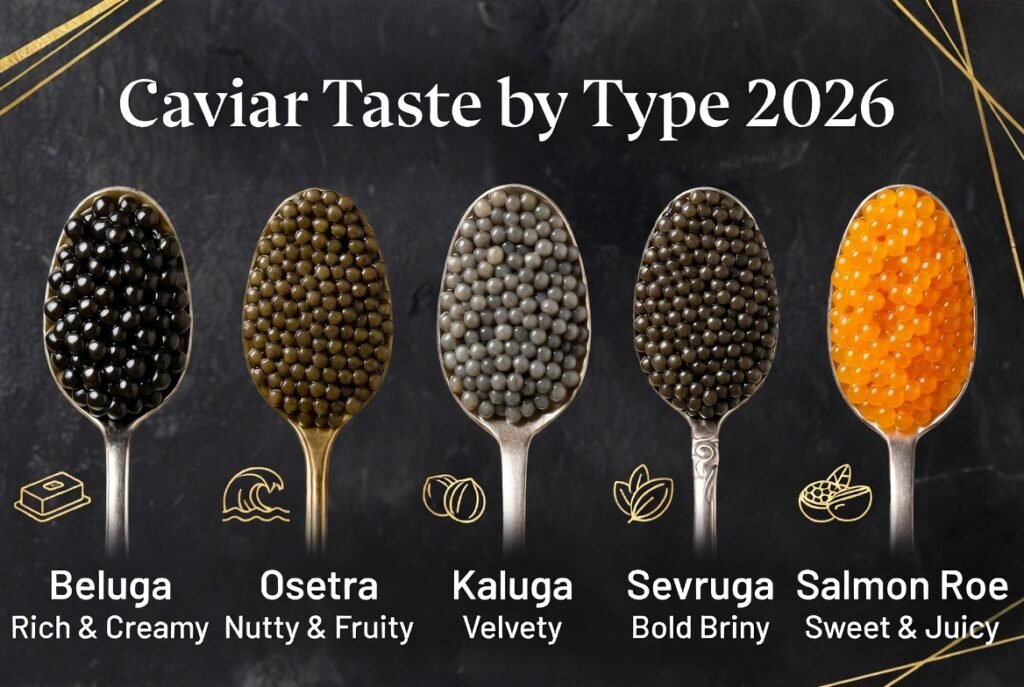
Different types offer unique twists on the classic profile. Here’s a detailed comparison table based on real tasting notes:
| Type | Taste Profile | Texture | Best For Beginners? | Price Tier |
|---|---|---|---|---|
| Beluga | Deep creamy richness with bold nutty finish | Large, dramatic glossy pearls | Yes, for luxury seekers | Highest |
| Osetra | Nutty and slightly fruity with clean ocean brine | Medium-firm, satisfying pop | Excellent first choice | Medium-High |
| Kaluga | Velvety creamy with mild nuttiness | Firm yet smooth burst | Very approachable | Medium-High |
| Sevruga | Bolder brininess with sharper salty edge | Smaller, quick-pop pearls | Good if you like intensity | Medium |
| Salmon Roe (Ikura) | Bright, sweet oceanic flavor with juicy brininess | Larger, softer, very juicy pop | Perfect absolute beginner | Lowest |
| Hackleback/Paddlefish | Mild earthy nuttiness with clean finish | Firm and glossy | Solid everyday option | Medium |
This table directly answers searches like what does beluga caviar taste like, what does osetra caviar taste like, what does salmon roe taste like, and what does red caviar taste like. Notice how 2026 farmed versions often taste cleaner than older wild options.
How to Serve Caviar Like a True Gourmet | Social Life Magazine
What Affects Caviar Taste? Key Factors
Several unique factors shape the final experience — details some top-ranking pages mention only briefly:
- Freshness and storage: Caviar must stay at 28-32°F. Once opened, enjoy it within one hour.
- Malossol salting: This light curing preserves the delicate briny and buttery notes.
- Sturgeon environment: Water quality and diet create subtle mineral differences. Farmed sturgeon in 2026 often deliver more consistent flavors thanks to controlled conditions.
- Maturation time: Sturgeon take 10–25+ years to produce roe, concentrating those nuanced tastes.
A unique insight from in-depth guides: environmental factors like water mineral content can add faint “earthy” or “sweet oceanic” undertones that distinguish one batch from another.
What to Expect on Your First Bite (Exclusive First-Timer Play-by-Play)
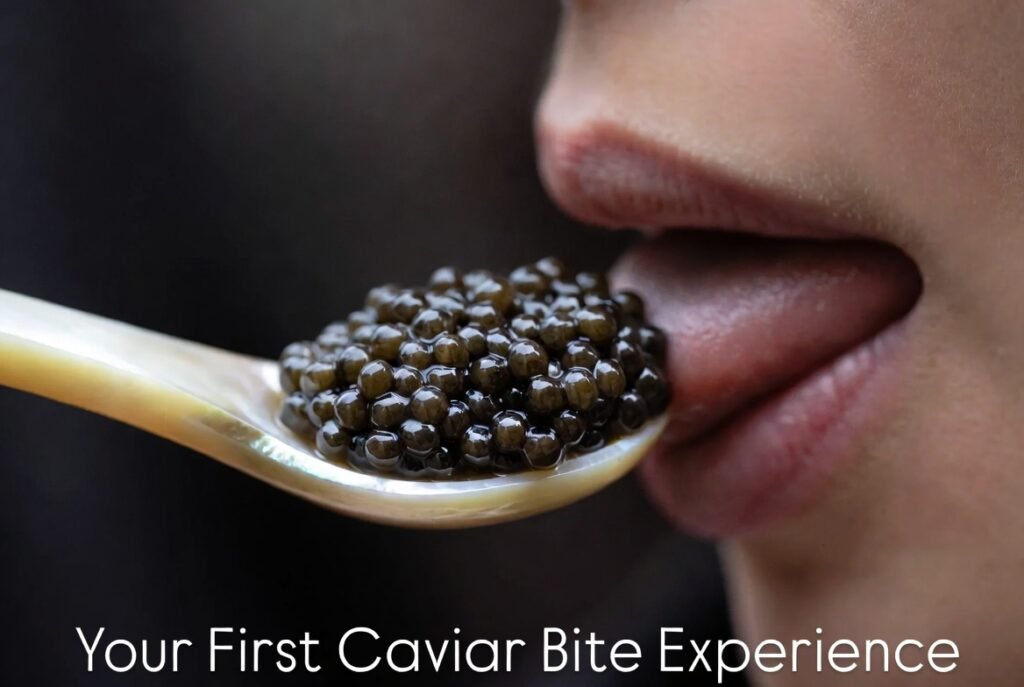
Here’s a step-by-step that goes deeper than most competitors:
- Take a quarter teaspoon portion.
- Let it rest at room temperature for 10–15 minutes.
- Place the pearls on your tongue and let them warm naturally.
- Feel the gentle resistance, then the satisfying burst on tongue.
Most first-timers say the experience feels far more subtle and elegant than expected. One luxury blogger described it as “a tiny explosion of ocean butter that makes you smile.”
Does caviar actually taste good? Yes — especially when you follow these steps.
How to Serve Caviar for Maximum Flavor
Proper serving unlocks the full profile. Always use a mother-of-pearl spoon (metal creates a metallic aftertaste). Serve chilled but never frozen.
Classic pairings include blinis with crème fraîche, chopped egg, onion, and chives. Champagne or chilled vodka enhances the briny and nutty notes perfectly. For more serving inspiration, check this sustainable seafood guide.
Unique tip found in top sources: serve on a bed of crushed ice to maintain temperature without diluting flavor.
Common Myths & Mistakes
- Myth: Caviar must taste strongly fishy. Reality: that only happens with poor quality or expired caviar, which develops sour or metallic notes.
- Mistake: Using metal utensils or serving with overpowering flavors that hide the natural taste.
Why caviar tastes different than you expected usually comes down to freshness or improper storage.
Caviar Nutrition, Safety & Storage (2026 Updates)
Caviar is a superfood rich in omega-3 fatty acids that support heart and brain health. Is caviar safe for pregnancy? Pasteurized options are generally fine in small amounts — always consult your doctor.
How long does caviar last once opened? One hour maximum for peak taste and safety. For more on sustainable sourcing, see this FAO fisheries report.
Best Caviar for Beginners 2026
Start with Osetra or Kaluga for balanced nutty and buttery flavors. Salmon roe is the ultimate gateway because of its sweeter, brighter pop. These choices reflect the best caviar for beginners 2026 thanks to improved sustainable farming.
FAQs
What does caviar taste like for first-timers?
A gentle briny ocean flavor with buttery creaminess, nutty depth, and a satisfying pop — elegant and never fishy.
Does caviar taste fishy?
No, premium versions offer clean sea essence instead.
What does good caviar taste like?
Subtle creamy richness, nutty elegance, and a clean ocean finish from glossy pearls.
Caviar texture pop explained — why does it matter?
The burst releases flavor perfectly, creating that memorable velvety experience.
Sustainable caviar vs wild caviar taste difference?
In 2026 the gap is minimal — farmed versions are often cleaner and more consistent.
Conclusion & Next Steps
What does caviar taste like? It’s a refined symphony of clean briny ocean, buttery richness, nutty sophistication, and that signature pop — all in one luxurious bite. With 2026 sustainable options dominating the market, there’s never been a better time for first-timers to try it.
Armed with this guide — including unique details on environmental influences, exact serving steps, and real-world taste comparisons — you’re ready to enjoy caviar like a pro. Start small, savor slowly, and let the delicate sea breeze surprise you.
Go to Sac Biz News for more quality, informative content.