


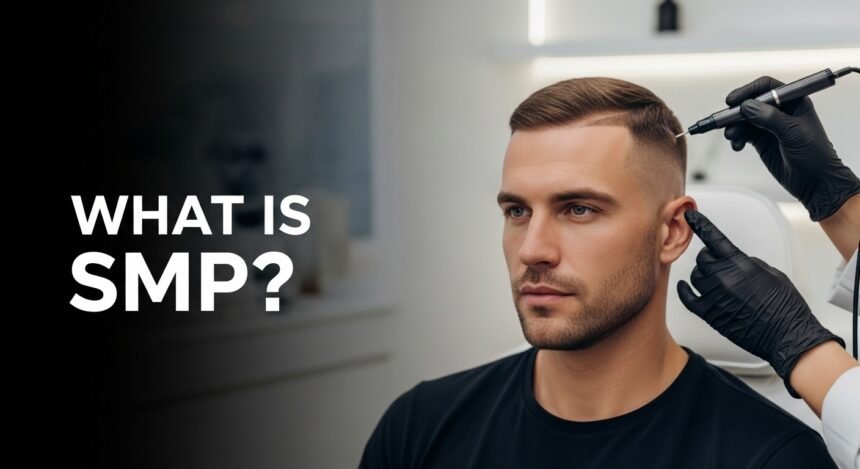
What is SMP? Scalp Micropigmentation (SMP) is an advanced, non-surgical superficial cosmetic tattoo that uses specialized microneedles to deposit carbon-based black pigment into the upper dermal level of the scalp. This highly specialized treatment perfectly replicates the look of natural hair follicles, creating the illusion of a full head of shaven hair or adding density to thinning areas.
- How Does Scalp Micropigmentation Work?
- The Crucial First Step: Consultation and Hairline Mapping
- Choosing Your Style: Soft vs. Crisp Hairlines
- Who is a Good Candidate for SMP?
- The SMP Timeline: Sessions and Healing
- Does SMP Hurt? Risks and Medical Considerations
- How Long Does It Last & Cost?
- SMP vs. Other Hair Loss Treatments
- The Pros and Cons of SMP
- Frequently Asked Questions (FAQs)
- Conclusion
If you are dealing with thinning hair, a receding hairline, or total baldness, finding a reliable solution can feel overwhelming. Over the past 10 years, SMP has become the leading non-surgical hair restoration method. Unlike pills or invasive surgeries, it offers guaranteed, immediate results.
This comprehensive guide covers everything from the initial face-mapping consultation to costs, medical safety, and exactly why this SMP treatment is changing lives globally.
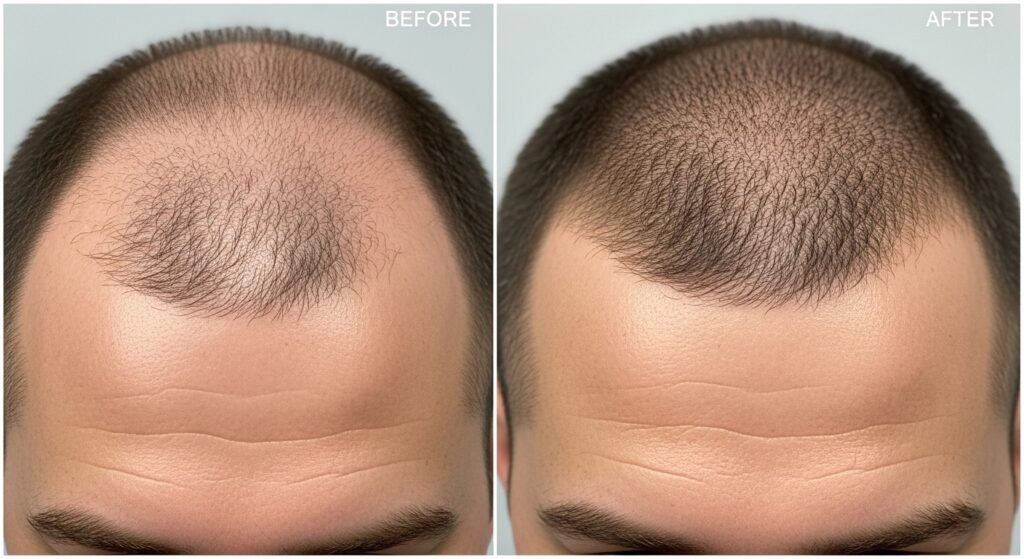
How Does Scalp Micropigmentation Work?
While it is commonly referred to as a hair tattoo, calling it a simple scalp tattoo is highly inaccurate. The SMP procedure is deeply rooted in both medical precision and artistic skill.
Practitioners use a technique called pointillism—the meticulous application of thousands of micro-dots. By varying the angle, depth, and pigment shade, a skilled artist replicates natural hair follicles with stunning realism.
Unlike traditional body tattoos that push ink deep into the hypodermis, a cosmetic hair tattoo targets only the epidermal level and the very top of the upper dermis. Using cosmetic-grade permanent inks that are Titanium Dioxide / Iron-Oxide Free, practitioners ensure the pigment never turns blue or green over time.
Fact: A critical error made by unskilled artists is pressing too deeply into the scalp. This causes a blowout or pigment migration, resulting in blurry, oversized dots. Always choose a certified clinic.
The Crucial First Step: Consultation and Hairline Mapping
One crucial element that separates top-tier clinics from amateurs is the consultation phase. Before a single needle touches your skin, a master practitioner will conduct a thorough facial analysis.
Face Mapping and Symmetry
Your facial structure, age, and forehead muscles heavily dictate where your new hairline should naturally sit. A practitioner will measure your facial proportions and draw a wax pencil outline on your scalp. This ensures that your new hairline frames your face perfectly and moves naturally when you raise your eyebrows.
“The hairline design is the make-or-break moment of SMP. We don’t just draw a line; we study bone structure, muscle movement, and age-appropriateness to create a hairline that looks 100% natural.” — Master SMP Artist
Choosing Your Style: Soft vs. Crisp Hairlines
Not all SMP treatments look the same. Depending on your personal style, age, and lifestyle, you can customize the exact look of your buzz cut. Top barbers and SMP artists generally categorize hairlines into two main styles:
| Hairline Style | Best For | Description |
| The Soft / Feathered Hairline | Older men, or those wanting a subtle, natural look. | Uses lighter pigments and scattered dots at the very front to mimic a naturally maturing, slightly receding hairline. |
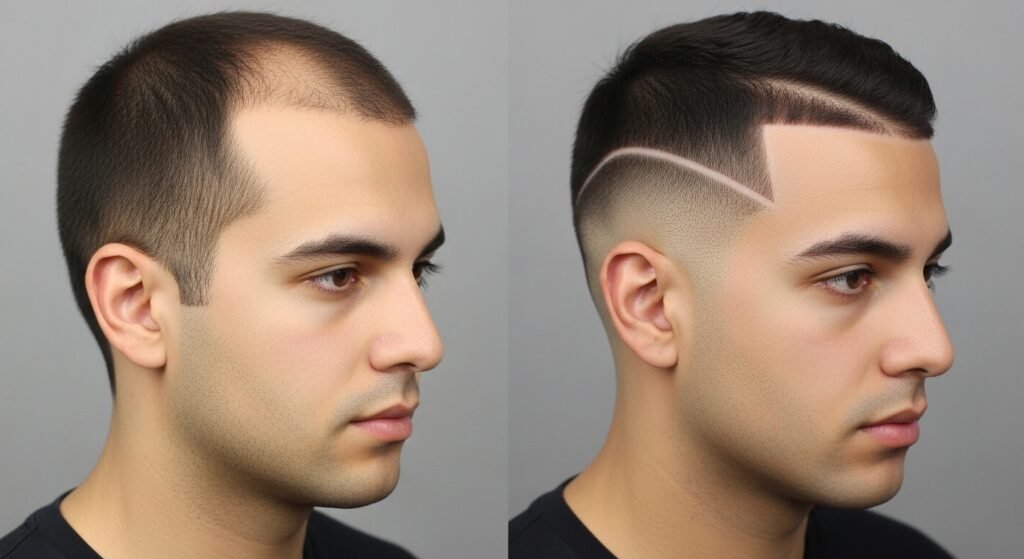
| The Crisp / Edged-Up Hairline | Younger men, or those who frequent the barber. | Recreates the sharp, defined “line-up” look you get fresh out of the barber’s chair. Highly defined and symmetrical. |
Who is a Good Candidate for SMP?
Because it is a noninvasive procedure, almost anyone suffering from hair loss is a viable candidate.
Treating Male Pattern Baldness
For men, hair loss is measured on the Norwood Scale. Whether you are a Norwood 2 just noticing a receding hairline or a Norwood 7 with complete top-of-the-head baldness, SMP can restore the appearance of a full shaven head.
Scalp Micropigmentation for Women (No Shaving Required)
A massive breakthrough in SMP is the hair density treatment for women and men with diffuse thinning. Measured on the Ludwig Scale, female pattern baldness often reveals the pale scalp beneath the hair.
Unique to this technique: You do not need to shave your head. The practitioner carefully parts your existing long hair and applies the carbon-based pigment directly to the scalp, eliminating the contrast and making your hair look instantly thicker.
Scar Camouflage and Medical Conditions
SMP is widely used for concealing burns, treating alopecia (Areata or Universalis), and hiding FUE and FUT hair transplant scars.
Case Study: Mark’s Hair Transplant Correction
Patient: Mark, 38 years old.
The Issue: Mark underwent a surgical hair transplant that left him with a visible linear FUT scar on the back of his head and less density on top than he hoped for.
The Solution: Using specialized micro-needles, an SMP artist blended custom pigment into Mark’s scar tissue, making it virtually invisible. They then added a 3D effect density fill to his crown. Mark achieved the full scalp coverage he originally wanted without a second surgery.
The SMP Timeline: Sessions and Healing
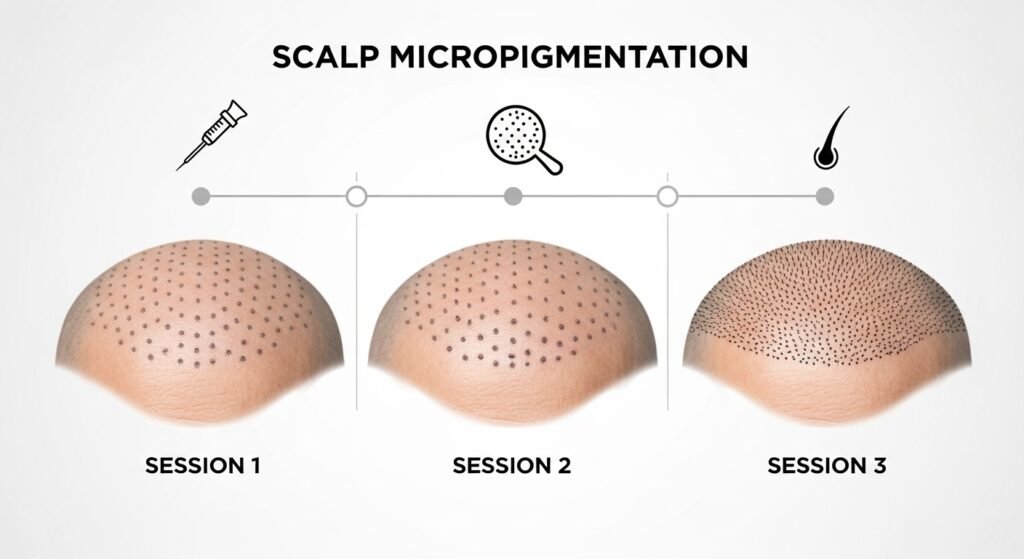
Achieving a flawless, natural-looking hairline requires a layered approach over a 6-8 week period. On average, you will need 2 to 3 sessions (sometimes 3 or 4 for severe scarring).
Session 1: The Foundation (2-4 hours)
The practitioner maps your hairline and applies a lighter foundation layer of pigment with wider spacing.
Session 2: Building Density (2-3 hours)
Occurring 10 to 14 days later, this session uses darker pigments to fill the gaps, creating true full scalp coverage.
Session 3: Blending and Perfection (1-2 hours)
Scheduled 3 to 4 weeks later, this final appointment focuses on perfecting the blend between the tattooed area and your natural hair.
Does SMP Hurt? Risks and Medical Considerations
When asking, “Is scalp micropigmentation safe?”, the answer is yes, provided you go to a reputable clinic.
Pain Management
Because the needles only enter the upper dermis, pain is minimal. Clinics use a topical anaesthetic or numbing cream to ensure your comfort. Most clients rate the pain at a 2 or 3 out of 10. You will experience slight redness for 1-2 days, followed by a strict 4 days of dry heal (no water or sweating).
Medical Risks and MRI Scans
Medical boards highlight the importance of clinical hygiene. All equipment must be sterile and needles strictly single-use to prevent infection. Furthermore, traditional tattoo inks containing heavy metals can heat up and cause burns during MRI scans. By using high-quality, organic pigments free of heavy metals, top-tier SMP clinics completely eliminate this medical risk, making the procedure entirely MRI-safe.
How Long Does It Last & Cost?
SMP is considered permanent, but it does undergo natural fading. Your body’s immune system deploys macrophage cells that slowly break down the pigment. Additionally, sebaceous glands producing scalp oils and UV sun exposure will accelerate this fading.
To keep your buzz cut look crisp, you will need a quick touch-up session every 2 or 3 years.
Estimated Pricing Table
| Treatment Type | Estimated Cost (UK £) | Estimated Cost (US $) |
| Mild Thinning / Scar Camouflage | £400 – £800 | $500 – $1,000 |
| Standard SMP (Norwood 2-4) | £600 to £1,300 per session | $800 to $1,500 per session |
| Full Scalp Restoration (Norwood 5-7) | £2,000 – £3,000 (Total) | $2,500 – $4,000 (Total) |
| Future Top-Up Sessions | £470 to £1000 | $500 to $1,200 |
SMP vs. Other Hair Loss Treatments
SMP vs. Hair Transplant: Transplants are surgical, take 12 months to show results, and carry a risk of graft failure. SMP is non-surgical and provides instant results immediately after the 1st session.
SMP vs. Tricopigmentation: Tricopigmentation is a temporary version of SMP that fades completely in 12-18 months, requiring costly yearly maintenance. SMP is a long-term, permanent solution.
The Pros and Cons of SMP
The Pros:
Guaranteed Results: It works 100% of the time, instantly recreating a hairline.
Non-Surgical: Zero incisions, zero scarring, and no lengthy downtime.
Cost-Effective: Significantly cheaper over a lifetime than continuous hair loss medications or multiple transplant surgeries.
The Cons:
Requires Shaving: For fully bald men, you must commit to shaving your remaining hair every 2-3 days to match the 3D effect of the tattoo.
No Physical Hair Growth: It is a cosmetic illusion. Your scalp will remain smooth to the touch.
Maintenance Required: You must commit to top-up sessions every few years.
Frequently Asked Questions (FAQs)
What does SMP stand for?
SMP stands for Scalp Micropigmentation. It is the clinical term for depositing pigment into the scalp to replicate natural hair follicles.
Will SMP damage my existing hair follicles?
No. The epidermal level where the pigment rests is much shallower than the deeper hypodermis where your hair roots live. The micro-needles will not harm your native hair.
Can I wash my hair after SMP?
During the first 4 days, you must strictly follow the dry heal protocol to prevent pigment loss. Afterward, you can wash your scalp gently with a mild shampoo.
Can it cover burns or trauma scars?
Yes. SMP is highly effective at concealing burns, accident scars, and surgical marks by blending the damaged tissue into the surrounding healthy hair follicles.
Conclusion
Scalp Micropigmentation (SMP) is far more than just a cosmetic procedure; it is a profound confidence booster. By combining the artistry of pointillism with advanced medical safety, SMP offers a flawless, natural-looking hairline without the risks of surgery. Whether you want a sharp barber edge-up, a soft receding look, or a density fill to hide thinning hair, booking an expert consultation is your first step toward taking back your confidence.
Go to Sac Biz News for more quality, informative content.