


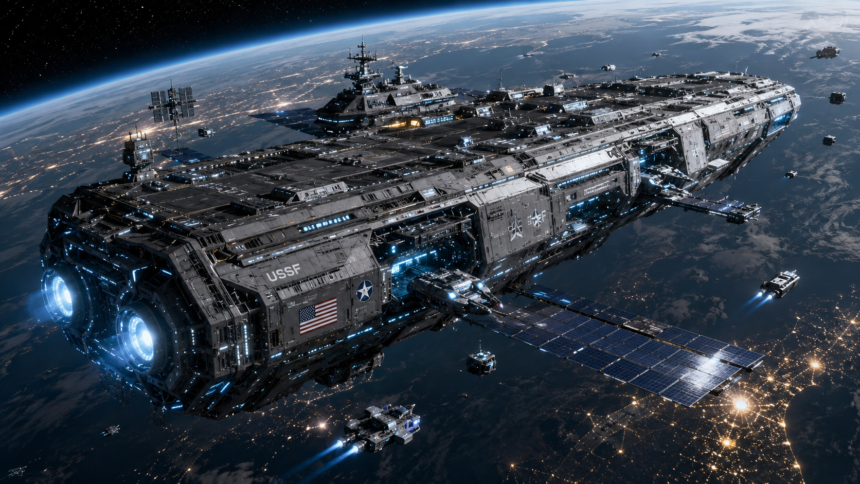
The Space Force Orbital Warship Carrier is quickly becoming one of the most talked about developments in military space technology. This advanced orbital platform promises to change how the United States defends its assets in space.
- What Is the Space Force Orbital Warship Carrier?
- Gravitics and the 60 Million Dollar Space Force Project
- How an Orbital Aircraft Carrier Works in Space
- Strategic Role in US Space Force Operations
- Key Capabilities and Potential Missions
- Technological Challenges Facing the Project
- International Law and the Risk of Escalation
- Future Outlook and Long Term Impact
- Why This Project Matters for Everyday Life
- Final Thoughts
Unlike traditional satellites that launch from Earth and stay fixed in their roles, the Space Force Orbital Warship Carrier functions as a mobile base in orbit. It can store, protect, and rapidly deploy smaller spacecraft whenever needed. Backed by up to 60 million dollars in funding, this project aims to give the US Space Force a major edge in a domain that is becoming more contested every year.
What Is the Space Force Orbital Warship Carrier?
The Space Force Orbital Warship Carrier, also known as the Orbital Carrier or Orbital Aircraft Carrier, is a large uncrewed spacecraft designed to operate as a mothership in Earth orbit. Its main job is to act as a pre positioned launch pad in space.
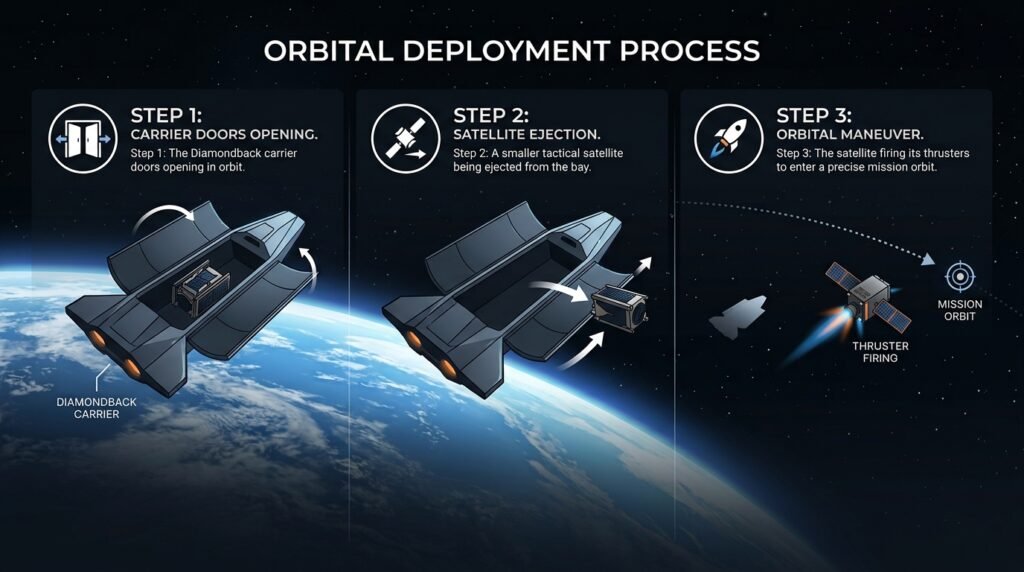
This platform can house multiple maneuverable space vehicles and satellites. When a threat appears or a new mission arises, it can deploy these assets quickly without depending on slow and expensive ground launches. The idea draws clear inspiration from naval aircraft carriers but adapted for the unique challenges of space.
Gravitics and the 60 Million Dollar Space Force Project
Gravitics, a Seattle based company specializing in space infrastructure, leads development of this technology. In March 2025, the company secured up to 60 million dollars through the SpaceWERX STRATFI program. This funding combines government support, Small Business Innovation Research funds, and private investment.
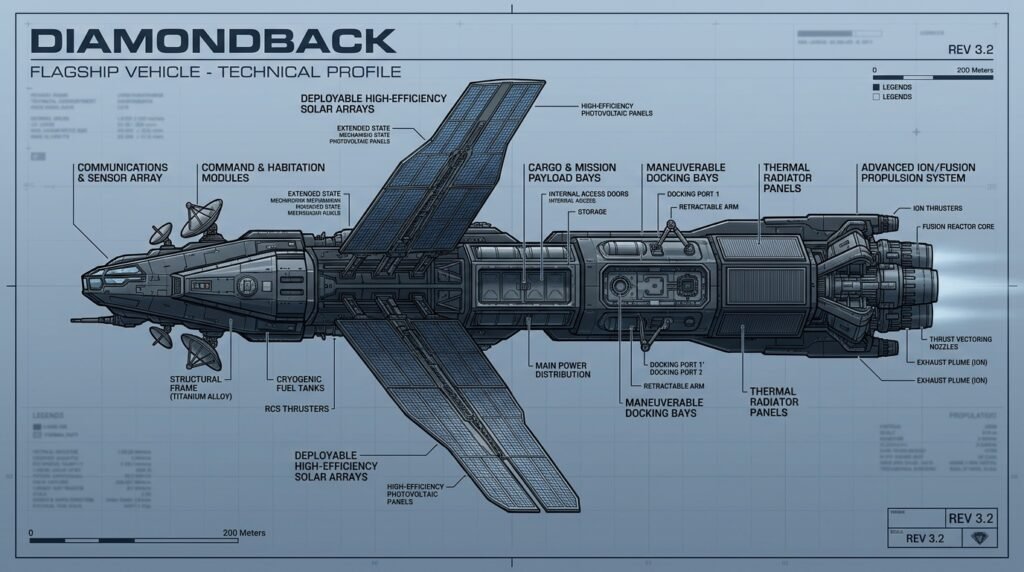
The flagship vehicle under this program is called Diamondback. It is a smaller but highly practical version of the full orbital carrier concept. Gravitics aims for its first flight around 2027. Earlier demonstrations could happen as soon as 2026.
Colin Doughan, CEO of Gravitics, explained the vision clearly. He said the Orbital Carrier bypasses traditional launch constraints and allows rapid selection of deployment orbits on demand. This capability is critical for modern space operations.
How an Orbital Aircraft Carrier Works in Space
The Orbital Carrier is engineered to survive and operate effectively in the harsh conditions of space. Once deployed, it uses solar power systems and potentially advanced propulsion to maintain its position.
It features docking bays for smaller vehicles, communication arrays, and sensors for constant monitoring. When needed, the platform can release satellites or defensive drones into precise orbits. This gives military planners much faster response times compared to ordering a new launch from the ground.
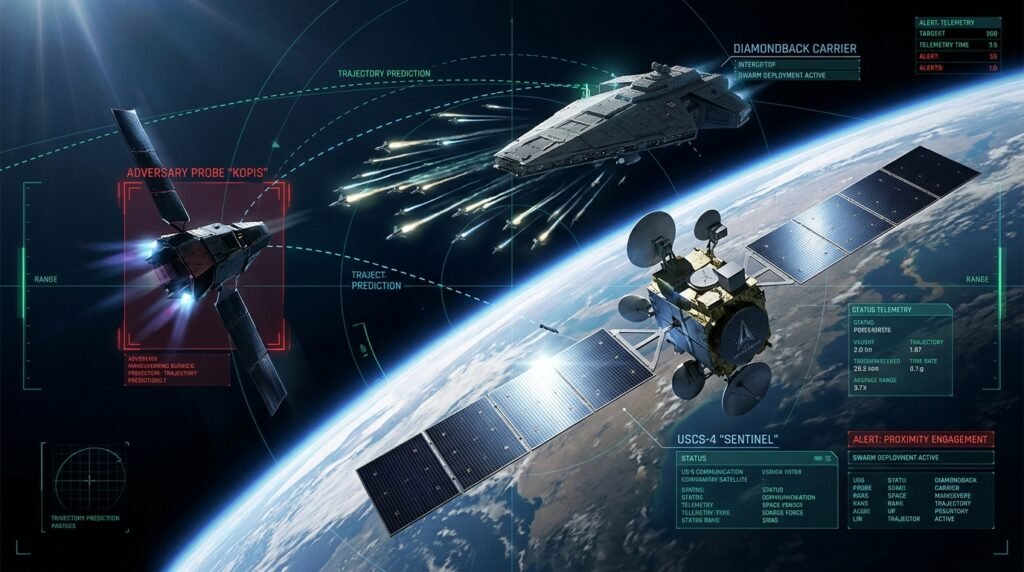
One unique aspect highlighted by sources is its ability to pre position assets for emergency responses. For example, if an adversary satellite threatens a critical US asset, the carrier could deploy a countermeasure almost immediately.
Here is a simple comparison table:
| Aspect | Traditional Ground Launch | Orbital Carrier Approach |
|---|---|---|
| Response Time | Days to months | Hours or less |
| Cost per Deployment | High | Lower after initial setup |
| Flexibility | Limited by launch windows | High, on demand from orbit |
| Vulnerability | Exposed during launch | Pre positioned and protected |
Strategic Role in US Space Force Operations
The US Space Force, established in 2019, created this project to address growing threats from nations like China and Russia. These countries have tested anti satellite weapons and conducted complex orbital maneuvers that could disrupt American satellites.
The Space Force Orbital Warship Carrier strengthens space domain awareness and supports counter space operations. It helps protect vital satellite networks that power GPS navigation, secure communications, and military intelligence.
By enabling tactically responsive space operations, the platform enhances overall space superiority. It allows the US to maintain control of the orbital domain even during periods of tension.
Key Capabilities and Potential Missions
Experts see several important missions for the Space Force Orbital Warship Carrier:
- Rapid replacement of damaged satellites in key constellations
- Inspection and repair of friendly spacecraft using space drones
- Defensive screening against anti satellite attacks
- Support for broader space logistics including refueling operations
- Potential contribution to missile defense concepts such as the Golden Dome project

These roles make the carrier much more than a simple warship. It functions as a versatile orbital support base.
Technological Challenges Facing the Project
Despite its promise, building a working Orbital Aircraft Carrier involves major engineering obstacles. Launching heavy components into orbit remains costly. The platform must withstand extreme temperature changes, high radiation levels, and constant risk from space debris.
Power management is another key issue. Sustained operations may require advanced solar arrays or even nuclear propulsion systems. Cybersecurity is equally important since any compromise of the carrier could have serious national security consequences.
Gravitics and its partners continue working on solutions to these problems through ongoing testing and development.
International Law and the Risk of Escalation
Deploying military platforms in space raises complex legal questions. The Outer Space Treaty forms the foundation of international space law, but gray areas remain regarding defensive systems.
Some analysts worry that projects like the Space Force Orbital Warship Carrier could spark an arms race in orbit. Others argue that strong defensive capabilities actually promote stability by deterring aggression. Careful diplomacy and transparency will be essential as this technology advances.
Future Outlook and Long Term Impact
The Diamondback represents only the beginning. Larger follow on platforms could emerge in the 2030s, potentially supporting lunar operations or deep space missions.
This technology may also benefit commercial space efforts. The same systems used for defense could help maintain satellite constellations or support future space stations.
For more insights into related manufacturing and production topics that support space industry growth, check out this helpful resource on our site: Repmold.
Why This Project Matters for Everyday Life
Most people do not think about space infrastructure daily, but modern life depends on it heavily. Satellites enable banking transactions, weather forecasting, global internet, and precise navigation. Protecting these assets with platforms like the Space Force Orbital Warship Carrier helps ensure reliability and security for everyone on Earth.
Final Thoughts
The Space Force Orbital Warship Carrier stands as a bold step into the future of space defense. With strong backing from the US Space Force and innovative work by Gravitics, this project could redefine how nations operate in orbit.
As development continues toward the 2027 target, the Space Force Orbital Warship Carrier will likely remain a major topic in both defense circles and public discussions about humanitys expanding presence in space. Its success may shape not only military strategy but also the broader future of space exploration and commerce.
Go to Sac Biz News for more quality, informative content.